Wiki Banner

Expert Q&A

Everything you need to know about customizing your dream drapes and shades.

Custom Curtains

View All

Can minimalist curtains still provide privacy?

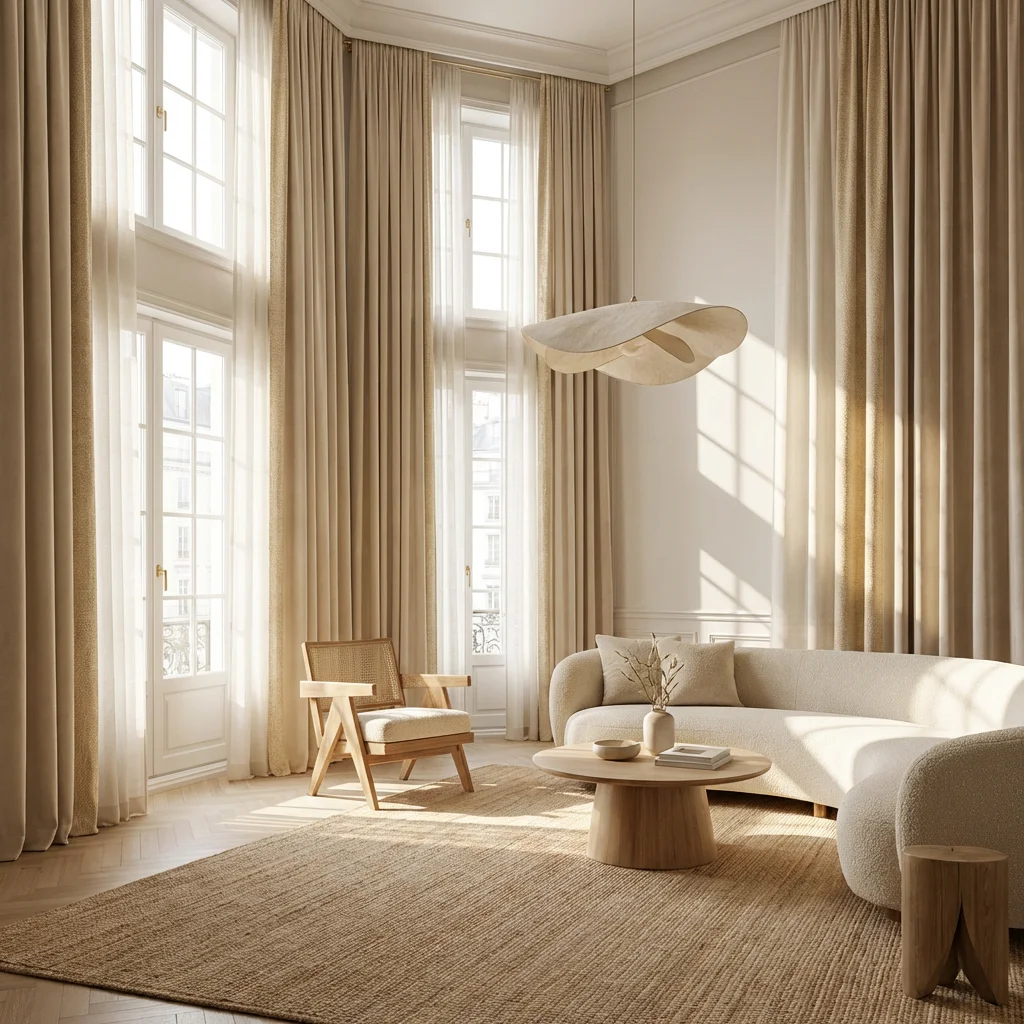
While 'Modern' and 'Minimalist' styles overlap, Minimalism takes simplicity a step further by removing all non-essential elements. Minimalist curtains aim to 'disappear' into the room's architecture. This is often achieved through 'tone-on-tone' design, where the curtain color exactly matches the wall color.

What are the defining features of 'Modern' curtains?

In the current design landscape, 'Modern' curtains are defined by clean lines, architectural hardware, and high-performance fabrics. Modern treatments favor 'Ripple Fold' or 'Tailored Pleat' headers that create uniform waves of fabric.

Why are Nordic style curtains usually light and airy?

Nordic design is influenced by the long, dark winters of Northern Europe, where maximizing natural light is a priority. Consequently, 'Nordic style' curtains are traditionally made from lightweight fabrics like white linen or semi-sheer cotton.

Can I use Boho-style curtains without the room looking messy?

The 'Boho' aesthetic is all about texture and layering. To achieve a sophisticated Boho look, focus on a consistent color palette—often earthy tones like terracotta, sage, or cream. Instead of busy patterns, look for 'textural' elements like tassels or macrame.

Blinds & Shades

View All

Roller vs Roman shades: Which is better?

Roller blinds offer a minimalist footprint, maximizing window exposure. Roman shades provide a more decorative, 'clothed' look when raised. Choose rollers for modern clean lines, and Romans for warmth and texture.

How to clean wooden Venetian slats?

Use the 'Kitchen Tongs Hack': Wrap two microfiber cloths around tongs and secure with rubber bands. This allows you to 'pinch' and wipe both sides of the slat simultaneously.

Are zebra blinds truly blackout?

Zebra blinds are celebrated for adjustable light control, but they are rarely 100% blackout. Light can bleed through the gaps between the dual-layered fabric bands.

Energy savings: Do honeycomb shades work?

Yes, honeycomb shades are the most energy-efficient. Their cells create air pockets that act as a thermal barrier, reducing heat loss in winter and gain in summer.

Swatches & Samples

View All

How to order free samples?

Simply visit our sample center, pick up to 10 fabrics, and we'll ship them to your door. Seeing the fabric in your home's unique lighting is the best way to ensure satisfaction.

Why is the color different from my screen?

Digital screens use RGB light (emissive), while fabric uses dyes (reflective). Screen calibration and home lighting vary, making physical samples the only 'source of truth'.

Shipping info for custom orders

Custom window treatments require specialized logistics. Standard shipping takes 10-15 days. For oversized rods (over 94 inches), freight services may be used to ensure safe arrival.

Can I return custom-made curtains?

Since every order is tailored to your exact measurements, returns are generally not accepted unless there is a manufacturing defect. This is why we highly recommend ordering samples first.

Accessories

View All

Are magnetic tiebacks safe for all fabrics?

Magnetic tiebacks are excellent for renters as they require no drilling. They are strong enough for most drapes, though very heavy velvet may require larger magnets or traditional wall hooks.

How to install curtain pin hooks correctly?

Insert the pin into the stiff 'buckram' tape at the top of the header, not the face fabric. Space them every 4-6 inches for a tailored, professional wave.

Silent curtain rings guide

To eliminate 'metal-on-metal' screeching, choose rings with nylon or plastic inner inserts. These act as a buffer, allowing the rings to glide smoothly and quietly.

How do I match rings to a rod?

You don't always need an exact match. Mixed-metal finishes are trending. When in doubt, match the rings to your room's hardware like doorknobs or light fixtures.

Still Have Questions?

Our experts are available to assist with your custom window treatment needs.

Custom Curtains

Expert Q&A

Linen Curtains

Q: Is linen a suitable choice for custom window treatments in high-humidity climates?
+
Linen is surprisingly well-suited for high-humidity environments due to its exceptional moisture-wicking and antimicrobial properties. Unlike synthetic fibers that can trap moisture and promote mildew, linen's hollow fibers allow air to circulate, helping it dry quickly and stay fresh. In humid regions, however, linen is more prone to 'movement'—expanding or contracting as the air saturation changes. To manage this in a bespoke-luxury context, we recommend selecting a linen-polyester blend for increased dimensional stability or using a high-quality, stable lining. Meticulous tailoring, including generous hems and weighted corners, helps the curtains maintain their silhouette despite environmental shifts. When correctly specified and installed, linen provides a breathable, cool, and sophisticated aesthetic that is perfectly in tune with the requirements of a coastal or tropical luxury home, offering both functional comfort and timeless style.
Q: How should bespoke linen drapery be cleaned and maintained for longevity?
+
Professional care is paramount for maintaining the heirloom quality of bespoke linen curtains. Because linen is a natural fiber, it is sensitive to temperature and moisture. We recommend professional dry cleaning as the safest method to prevent shrinkage and preserve the fabric's unique texture and finish. Between cleanings, regular light dusting with a soft-bristle brush or a low-suction vacuum can prevent airborne particles from settling into the weave. For minor wrinkles, a professional steamer used from a distance can refresh the fabric's appearance without causing water spots. Avoid using household cleaning sprays, which may contain chemicals that weaken the flax fibers. By adhering to a gentle, professional maintenance schedule, your custom linen curtains will retain their sophisticated drape and organic beauty, continuing to serve as a cornerstone of your home's refined interior design for decades to come.
Q: Why choose custom linen curtains over ready-made retail options?
+
The distinction between custom linen curtains and ready-made options lies in the precision of the fit and the quality of the finish. Ready-made curtains often use lower-grade linen with inconsistent weaves and lack the structural integrity required for a truly luxurious hang. Custom drapery allows for exact measurements, ensuring that the curtains frame your windows perfectly, whether you prefer a crisp floor-clearance or a dramatic puddle. Furthermore, bespoke services offer access to premium linens from world-renowned mills, providing a broader range of weights, colors, and textures. Technical details such as hand-sewn hems, weighted corners, and high-performance linings are standard in custom work, ensuring the linen drapes with authority and grace. Investing in custom linen is about more than just aesthetics; it is a commitment to artisanal craftsmanship that guarantees a unique, high-performance window treatment tailored specifically to the architectural requirements and design vision of your home.
Q: Are linen curtains a practical choice for luxury kitchen environments?
+
Linen curtains are an excellent and highly sophisticated choice for luxury kitchens, offering a perfect blend of practicality and style. One of linen's most significant advantages is its inherent breathability and antimicrobial properties, which help it resist moisture and odors—common challenges in culinary spaces. The fabric's natural durability allows it to withstand frequent light cleaning, while its light-filtering capabilities provide essential privacy without sacrificing the bright, clean atmosphere essential for a kitchen. For a more tailored look, consider café-style linen curtains or Roman shades, which keep the fabric away from work surfaces while still providing a touch of warmth and texture. Choosing a linen-polyester blend for the kitchen can further enhance stain resistance and ease of maintenance. When executed as a bespoke treatment, linen drapery adds a layer of artisanal quality that elevates the kitchen from a functional space to a central hub of refined living.
Q: How does linen drapery contribute to light diffusion and room ambiance?
+
Linen is unparalleled in its ability to transform harsh sunlight into a soft, ethereal glow. The irregular thickness of the flax fibers creates a natural filter that diffuses light across the room, eliminating glare while maintaining a bright, airy feel. This quality is particularly desirable in bespoke-luxury settings where the interplay of light and shadow is crucial to the room's mood. Unlined linen allows the most light to permeate, highlighting the fabric's intricate weave and organic texture. For spaces requiring more control, a light-filtering lining can be added to maintain the soft aesthetic while protecting interior furnishings from UV damage. The resulting ambiance is one of serene tranquility, making linen an ideal choice for morning rooms, sun-drenched lounges, or any space where a connection to the natural environment is desired. It creates a luminous backdrop that enhances the overall architectural beauty of the home.
Q: Is the characteristic 'wrinkle charm' of linen appropriate for formal interior designs?
+
The 'wrinkle charm' of linen is a hallmark of its authenticity and is increasingly embraced in high-end, formal interior design. This subtle texture, often referred to as 'wabi-sabi' luxury, suggests a relaxed yet sophisticated lifestyle that values natural beauty over synthetic perfection. In a formal setting, linen curtains provide a soft counterpoint to hard surfaces like marble or polished wood, adding a layer of depth and approachability. To maintain a professional look, we recommend selecting a heavier-weight linen or a linen-silk blend, which offers more structure. Proper installation and the use of weighted hems ensure the curtains hang with a crisp, intentional silhouette. When styled correctly, the natural creases of linen do not appear messy; instead, they signal a refined, bespoke choice that prioritizes organic textures and a lived-in, curated elegance that feels both modern and timeless.
Q: How do you manage the natural shrinkage associated with bespoke linen curtains?
+
Shrinkage is a natural characteristic of linen fibers, often occurring during the first few cleaning cycles or due to changes in atmospheric humidity. In the world of bespoke luxury, this is managed through meticulous craftsmanship and preparation. We recommend 'relaxing' the fabric before tailoring, which may involve professional pre-washing or steam-treating the yardage. When designing custom linen curtains, we often incorporate a slightly more generous hem or a 'puddle' at the floor. This not only allows for minor structural shifts but also enhances the romantic, effortless aesthetic that linen is known for. Additionally, using a high-quality lining can provide a stable framework that minimizes the visible effects of fiber contraction. By understanding the inherent nature of the material, we ensure that your investment maintains its perfect proportions and sophisticated silhouette throughout its long life in your home.
Q: What are the primary differences between 100% pure linen and linen-polyester blends for custom curtains?
+
Choosing between 100% pure linen and a linen-polyester blend is a foundational decision in bespoke drapery. Pure linen is the epitome of organic luxury, celebrated for its unique slubs, exceptional breathability, and the way it gracefully 'lives' in a space. It offers an unmatched tactile experience and an authentic aesthetic that synthetic fibers cannot fully replicate. However, linen-polyester blends are often preferred for their enhanced durability and resistance to wrinkling and shrinkage. By incorporating high-quality polyester, the fabric gains structural stability while retaining the visual character of linen. For high-traffic areas or environments with fluctuating humidity, a blend offers a more predictable drape. Conversely, for a formal drawing room where authenticity is paramount, 100% linen provides a prestigious, heirloom quality that matures beautifully over time, embodying a sense of timeless elegance and natural sophistication.
Q: Can I machine wash 100% linen curtains at home without them shedding or shrinking excessively?
+

Yes, but caution is key. Linen should be washed in cold or lukewarm water with a mild detergent on a gentle cycle. To preserve the fibers and prevent the "shedding" often reported on Reddit, avoid the dryer entirely—hang them to air-dry while slightly damp to minimize wrinkles. Experts recommend a "test patch" on a hidden corner first to check for fabric puckering or color changes. Proper air-drying prevents the extreme shrinkage that can occur with high-heat cycles, keeping your drapes looking tailored and professional for years.

Velvet Curtains

Q: What is the importance of pile density when selecting luxury velvet curtains?
+
In the realm of luxury velvet, pile density is the primary indicator of quality and performance. A high pile density means more fibers are packed into each square inch, resulting in a richer, deeper color and a more substantial hand-feel. This density provides the 'weight' that allows the curtains to hang with a majestic, column-like drape, creating a sense of architectural permanence. Denser velvets also offer superior light absorption and sound dampening, making them ideal for media rooms and primary suites. When evaluating bespoke samples, look for a 'plush' surface that doesn't easily show the backing fabric when folded. A high-density pile ensures that the velvet remains resilient over time, resisting crushing and maintaining its lustrous appearance. For a truly bespoke experience, selecting a dense cotton or mohair velvet provides a matte, sophisticated finish that exudes quiet luxury and exceptional longevity.
Q: How can velvet curtains be used for dramatic floor-to-ceiling installations?
+
Floor-to-ceiling velvet curtains are a premier design technique for creating a sense of grandeur and height in luxury interiors. By mounting the drapery tracks as high as possible—often directly to the ceiling—velvet's heavy drape and rich texture draw the eye upward, making the room feel more expansive and architecturally significant. The vertical lines created by deep, velvet folds add a stately rhythm to the space. For the most dramatic effect, we often recommend 'puddling' the velvet on the floor, which adds a layer of romantic opulence and ensures a seamless transition from wall to floor. This approach also maximizes the fabric's acoustic and thermal benefits by covering the entire wall surface. In bespoke-luxury homes, these large-scale installations are carefully planned to ensure the hardware can support the significant weight of the velvet, providing a flawless and enduring statement of style.

Blackout Curtains

Q: How do you minimize light leakage at the edges of custom blackout curtains?
+
To achieve total darkness, it is crucial to address 'light leakage'—the glow that often appears around the perimeter of the curtain. In bespoke installations, we use several techniques to eliminate this. 'Wrap-around' or 'French return' rods allow the curtain to curve back to the wall, sealing the gap at the sides. We also recommend mounting the track or rod several inches above the window frame and extending the curtains significantly beyond the window's width. For the most demanding environments, like home theaters, we can incorporate side channels or magnetic strips that secure the curtain edge directly to the wall. Additionally, using a weighted hem ensures the fabric hangs close to the window at the bottom. These meticulous installation details ensure that your custom blackout curtains provide the absolute darkness required for a truly immersive and restful experience.
Q: What aesthetic options are available for custom blackout liners in luxury drapery?
+
Gone are the days of unsightly, rubberized blackout liners. In the bespoke-luxury market, blackout linings are now available in a variety of sophisticated finishes that complement your face fabric. High-end sateen blackout linings offer a smooth, subtle sheen that looks beautiful from the exterior of the home, maintaining your property's 'curb appeal.' We can also use colored linings to match or contrast with your primary fabric, providing a cohesive look even when the curtains are viewed from behind. Another option is the use of 'interlined' blackout systems, where the light-blocking layer is hidden between two layers of decorative fabric, providing a perfectly finished appearance on both sides. This attention to the reverse side of the curtain is a hallmark of true luxury, ensuring that every detail of your window treatment is as refined and aesthetically pleasing as the interior design itself.
Q: Can blackout curtains be integrated with smart home automation systems?
+
In modern luxury homes, the integration of blackout curtains with smart home automation is the ultimate expression of convenience and functional luxury. Motorized tracks allow you to control your window treatments via smartphone apps, voice commands, or pre-set schedules. This is particularly beneficial for blackout curtains, as you can program them to open gradually in the morning to mimic a natural sunrise, helping you wake up gently. You can also set them to close automatically during the hottest part of the day to maximize energy efficiency. For large-scale windows or high-ceiling installations, motorized automation ensures effortless operation without the need for manual cords. Integrating your custom blackout drapery into a central automation system provides a seamless, high-tech experience that enhances both the functionality and the sophisticated, modern appeal of your living environment.
Q: How do blackout curtains provide thermal benefits for seasonal temperature control?
+
Bespoke blackout curtains act as an effective thermal buffer, maintaining a consistent and comfortable indoor climate regardless of the season. During the heat of summer, the opaque lining reflects radiant energy away from the window, significantly lowering the indoor temperature and reducing reliance on artificial cooling. In the winter, the heavy, multi-layered construction—often including an interlining—traps a layer of air between the curtain and the glass, providing an extra level of insulation that prevents heat loss. This year-round temperature regulation is a key feature of luxury home design, where comfort is paramount. By custom-fitting these curtains to eliminate 'thermal gaps' around the edges, homeowners can enjoy a stabilized environment that feels cozy in the winter and refreshingly cool in the summer, all while showcasing the beautiful, high-end face fabric of their choice.
Q: What role do blackout curtains play in improving sleep quality and circadian health?
+
High-quality blackout curtains are more than a design choice; they are an investment in wellness. Our bodies rely on absolute darkness to trigger the production of melatonin, the hormone responsible for deep, restorative sleep. Even minor light pollution from streetlights or early morning sun can disrupt this process and negatively impact your circadian rhythm. By installing custom blackout drapes that eliminate light leakage, you create an optimized environment for sleep health. This is particularly crucial for shift workers, parents of young children, or anyone living in an urban environment. In the context of a bespoke-luxury master suite, blackout curtains ensure that your bedroom remains a true sanctuary, free from external disturbances. The result is improved focus, mood, and overall vitality, proving that the most luxurious feature of a home is often the quality of the rest it provides to its inhabitants.
Q: How do blackout curtains contribute to energy efficiency and thermal comfort?
+
Custom blackout curtains are a powerful tool for enhancing a home's energy efficiency. By creating a dense, opaque barrier at the window, they significantly reduce thermal transfer. During the summer months, they reflect solar heat, keeping interiors cool and reducing the load on air conditioning systems. In the winter, the heavy fabric and specialized linings act as an insulating layer, preventing precious indoor heat from escaping through the glass. This thermal benefit is most effective when the curtains are custom-fitted to minimize gaps where air can circulate. For maximum efficiency, we recommend 'wrap-around' or 'return' rods that allow the curtain to touch the wall, sealing off the window perimeter. This level of functional luxury not only improves the daily comfort of your living space but also contributes to a more sustainable and cost-effective home environment, all while maintaining a high-end, tailored aesthetic.
Q: Why is a double rod setup recommended for high-end blackout window treatments?
+
A double rod setup is a hallmark of sophisticated, multi-functional window design. This configuration allows you to layer a decorative face fabric—such as silk, linen, or velvet—over a dedicated blackout panel or a light-filtering sheer. During the day, the blackout layer can be tucked away, allowing the sheer to soften the light and provide daytime privacy. At night, the blackout curtains can be drawn to create a perfectly dark sanctuary. This layering adds a sense of depth and opulence to the window treatment, which is highly valued in bespoke luxury interiors. Additionally, a double rod system allows for greater thermal and acoustic control, as the air gap between the layers acts as an extra insulator. From a design perspective, it provides the flexibility to change the room's mood and functionality instantly, making it a highly practical and aesthetically pleasing choice for discerning homeowners.
Q: What is the difference between 'True Blackout' and 'Room Darkening' curtains?
+
Understanding the distinction between 'True Blackout' and 'Room Darkening' is essential for achieving your desired level of light control. True Blackout curtains utilize a specialized fabric or a multi-layered lining that is 100% opaque, effectively blocking all light from passing through the material. This is the gold standard for bedrooms and media rooms where total darkness is required. Room Darkening curtains, on the other hand, are typically made from heavy, tightly woven fabrics that significantly reduce incoming light but may still allow a faint, ambient glow to permeate. While room darkening options are excellent for reducing glare in living areas, they do not provide the absolute darkness needed for optimal sleep hygiene. In a bespoke setting, we often recommend True Blackout linings for their superior performance, ensuring that your custom drapery meets the highest standards of functionality without compromising the aesthetic beauty of your chosen face fabric.

Sheer Curtains

Q: How can custom sheer curtains enhance the perceived height of a ceiling?
+
Sheer curtains are a powerful tool for manipulating the perceived proportions of a room. By mounting the sheer track as close to the ceiling as possible and allowing the fabric to fall all the way to the floor, you create long, uninterrupted vertical lines that draw the eye upward. This creates an illusion of significantly higher ceilings and a more grand, voluminous space. Because sheers are lightweight and translucent, they do not 'weigh down' the room visually, even when used in large quantities. In bespoke-luxury design, we often specify floor-to-ceiling sheers that extend across the entire width of a wall, effectively 'erasing' the corners and creating a soft, continuous architectural feature. This technique not only maximizes the sense of height but also provides a serene, unified backdrop that enhances the overall elegance and sophistication of your interior environment.
Q: Can sheer curtains be used effectively as a standalone window treatment?
+
In many contemporary luxury designs, sheer curtains are increasingly used as a standalone window treatment to create an airy, ethereal, and expansive feel. This approach is particularly effective in rooms that do not require absolute blackout or total evening privacy, such as high-rise apartments with stunning views or secluded garden-facing lounges. Standalone sheers allow for a seamless connection between the indoors and the outdoors, softening the architectural lines of the window without blocking the natural landscape. To ensure a luxurious finish when using sheers alone, we recommend a high degree of 'fullness'—using 2.5 to 3 times the width of the window in fabric—and meticulous custom tailoring with weighted hems. This ensures the curtains hang with a stately, purposeful grace rather than looking sparse. Used correctly, standalone sheers embody a sophisticated, minimalist luxury that celebrates light and space.
Q: What is the impact of embroidered versus plain sheer fabrics in luxury design?
+
The choice between embroidered and plain sheers significantly alters the character of a room. Plain sheers are the epitome of modern, minimalist luxury, providing a clean, architectural finish that emphasizes natural light and the view beyond. They are versatile and timeless. Embroidered sheers, on the other hand, add a layer of artisanal craftsmanship and traditional opulence. From subtle tone-on-tone patterns to intricate floral designs, embroidery creates an interplay of light and shadow on the fabric's surface, adding visual depth and texture. In a bespoke-luxury setting, embroidered sheers are often used as a statement piece in formal dining rooms or primary suites. When selecting your fabric, consider the room's overall aesthetic; plain sheers offer a serene, quiet backdrop, while embroidered options provide a curated, high-end detail that showcases your personal style and appreciation for fine textile art.
Q: How do you select the right weight for bespoke sheer curtains?
+
The weight of a sheer fabric—measured in grams per square meter (gsm)—is a critical factor in determining its drape and transparency. Ultra-lightweight sheers, such as silk organza or fine voile, offer an ethereal, cloud-like quality that provides minimal privacy but maximum light diffusion. These are ideal for formal rooms where the goal is a soft, atmospheric glow. Mid-weight sheers, like fine linens or heavier batistes, offer more structure and a greater degree of daytime privacy, making them a practical choice for bedrooms and street-facing living areas. In bespoke design, we select the weight based on the window's scale and the desired level of 'fullness.' A heavier sheer will hang with more authority and resist billowing in a breeze. By matching the weight to your specific functional and aesthetic goals, we ensure that your custom sheers provide the perfect balance of luminous beauty and practical performance.
Q: What should homeowners consider regarding night transparency with sheer curtains?
+
A common consideration with sheer curtains is their 'night transparency.' While sheers provide excellent privacy during the day, the effect is reversed at night when the interior of the home is illuminated. To an observer outside, sheers become almost transparent, revealing silhouettes and interior details. In a bespoke-luxury context, we address this by recommending a layered approach. Pairing sheers with a heavier secondary curtain—such as a blackout or a lined silk—allows for a transition to total privacy in the evenings. Alternatively, selecting a 'semi-sheer' fabric with a tighter weave or an embroidered pattern can offer a slightly higher degree of evening obscuration, though it will still not provide the total privacy of a solid fabric. Understanding this dynamic is key to designing a window treatment that meets your lifestyle needs at all hours, ensuring your home remains a private retreat.
Q: How should delicate sheer curtains be cared for to ensure their longevity?
+
Luxury sheers are often made from delicate fibers like silk, fine linen, or high-end synthetics, requiring a specialized care routine. To maintain their ethereal beauty, we recommend regular, light dusting with a feather duster or a very low-suction vacuum. When it comes to cleaning, professional dry cleaning is often the safest route to prevent snagging, shrinking, or damage to the fine weave. If the fabric is marked as washable, use a delicate cycle with a mesh laundry bag and a pH-neutral detergent. Avoid harsh chemicals or bleach, which can weaken the fibers and cause yellowing. When drying, never tumble dry; instead, hang the sheers while slightly damp to allow gravity to pull out any minor wrinkles. By treating your custom sheers with the care they deserve, you ensure that they continue to provide a soft, luminous glow and a refined finishing touch to your home for years to come.
Q: What are the benefits of layering sheer curtains with blackout drapery?
+
Layering sheers with blackout curtains is a sophisticated design strategy that offers the best of both worlds in terms of aesthetics and functionality. This combination provides total light control throughout the day and night. During the day, the sheers can be used alone to filter sunlight and provide privacy, while the blackout panels are held back as decorative frames. At night, the blackout curtains can be closed over the sheers to provide total darkness and insulation. Beyond functionality, this layering adds a luxurious depth and texture to the window, allowing for a mix of materials—such as a crisp linen sheer paired with a heavy velvet blackout. This approach is highly favored in bespoke-luxury interiors as it allows the homeowner to curate the room's atmosphere with precision, ensuring that the window treatment is as versatile as it is beautiful.
Q: How can sheer curtains provide daytime privacy without sacrificing natural light?
+
Sheer curtains are the ultimate solution for balancing the need for privacy with the desire for a bright, sun-filled home. The fine, translucent weave of luxury sheers allows natural light to flood the room, creating an airy and expansive feel. However, from the outside looking in, the fabric acts as a visual screen, obscuring the view and ensuring your daytime activities remain private. This 'one-way' visibility is perfect for urban residences or rooms facing the street. To maximize this effect in a bespoke setting, we often use higher-density sheers or layered voiles that provide more coverage without becoming heavy. The result is a beautifully lit space that feels secure and secluded. When custom-tailored to the exact height of your windows, sheers provide a seamless, elegant finish that enhances the architectural lines of your home while providing a crucial layer of functional comfort.

Cotton Curtains

Q: How can cotton be styled to achieve a casual-chic versus a formal luxury look?
+
Cotton's versatility allows it to bridge the gap between casual-chic and formal luxury through careful styling and tailoring. For a casual-chic aesthetic, we might recommend a textured cotton-linen blend with a simple grommet or rod-pocket header, allowing the fabric to drape in a more relaxed, natural way. Puddling the fabric on the floor further enhances this effortless, 'lived-in' luxury. Conversely, for a formal look, we select a high-thread-count cotton sateen or a heavy twill and specify a structured pinch-pleat or goblet header. Adding a contrasting leading-edge border or elaborate tie-backs can further elevate the formality. The use of premium linings and interlinings is essential for the formal look to provide the necessary 'fullness' and weight. By tailoring the hardware and construction techniques, we can transform the same basic fiber into a window treatment that perfectly suits the level of formality in your home.
Q: How do cotton weight variations, from voile to canvas, impact curtain design?
+
The weight of cotton fabric—ranging from delicate voiles to robust canvases—fundamentally dictates the style and function of the curtain. Lightweight cotton voiles are perfect for creating airy, translucent layers that softly diffuse light, ideal for morning rooms or sun-drenched lounges. Mid-weight cotton sateens and twills offer more structure and a subtle sheen, making them versatile choices for bedrooms and studies where a tailored look is desired. At the heavier end, cotton canvas or denim provides a stately, architectural presence with deep, defined folds, suitable for large windows in more relaxed, yet high-end, contemporary spaces. In bespoke design, we select the specific weight to match the room's scale and lighting requirements. Understanding these variations allows us to curate a window treatment that provides the exact degree of privacy, light control, and visual impact intended for your unique living space.
Q: What is the role of organic cotton in sustainable luxury drapery?
+
Organic cotton is becoming a cornerstone of sustainable luxury, offering a high-end aesthetic that aligns with eco-conscious values. Unlike conventional cotton, organic cotton is grown without synthetic pesticides or fertilizers, resulting in a purer fiber that is softer on the skin and better for the environment. In bespoke drapery, organic cotton provides a beautiful, natural texture and a matte finish that exudes quiet, understated luxury. Many high-end mills now offer organic cotton in a range of sophisticated weaves and colors, ensuring that sustainability does not come at the expense of style. By choosing organic cotton for your custom window treatments, you are investing in a product that is both ethically produced and exceptionally comfortable, contributing to a healthier indoor environment and a more responsible approach to interior design without compromising on quality or elegance.
Q: Are cotton curtains suitable for luxury homes in humid environments?
+
Cotton is an excellent choice for luxury homes in humid climates, provided it is specified and maintained correctly. As a natural, breathable fiber, cotton allows moisture to dissipate rather than trapping it against the window, which helps prevent the development of stale odors. However, 100% cotton can be prone to 'sagging' or 'shrinking' in extreme humidity. To address this in a bespoke-luxury context, we recommend selecting a high-quality cotton-polyester blend, which offers greater dimensional stability while retaining the natural look and feel of cotton. Additionally, using a moisture-resistant lining can provide an extra layer of protection. Proper installation with weighted hems ensures the curtains maintain their shape despite atmospheric changes. When carefully selected, cotton window treatments provide a fresh, crisp, and comfortable aesthetic that is perfectly suited to the requirements of elegant coastal or tropical living.
Q: How do you achieve a crisp, tailored look with bespoke cotton drapery?
+
Achieving a crisp, tailored look with cotton requires a combination of high-quality fabric selection and expert craftsmanship. We recommend choosing a 'weighty' cotton, such as a heavy twill or a cotton velvet, which has enough body to hold a structured pleat. The use of buckram—a stiffened fabric insert—in the header is essential for creating sharp, defined pleats like the pinch or goblet styles. Furthermore, custom cotton curtains should always be lined to provide the necessary weight and 'fullness' that prevents a limp appearance. Hand-sewn hems and the inclusion of drapery weights in the corners ensure that the curtains hang straight and true, framing the window with architectural precision. This attention to detail transforms simple cotton into a sophisticated design element that complements a modern, minimalist aesthetic or a more traditional, structured interior, embodying the essence of bespoke-luxury tailoring.
Q: How can I prevent sun fading in my custom cotton curtains?
+
Natural cotton is susceptible to sun fading over time, particularly in south-facing rooms with intense UV exposure. To preserve the vibrant colors and structural integrity of your bespoke cotton drapery, we always recommend a high-quality lining. A specialized UV-resistant or sateen lining acts as a sacrificial layer, absorbing the sun's rays and protecting the face fabric. For maximum protection, an interlining can be added, which also provides a more substantial, opulent hang. Another professional strategy is to use 'leading edges' made of a more sun-stable fabric or to incorporate a regular rotation schedule if the curtains are symmetrical. Using sheer curtains as an under-layer can also diffuse the harshest light before it reaches the cotton. By investing in these protective measures during the custom design process, you ensure that your cotton curtains retain their rich hue and sophisticated appearance for many years.
Q: What are the advantages of natural cotton versus cotton-polyester blends?
+
The choice between 100% natural cotton and a cotton-polyester blend often depends on the specific requirements of the space. Pure cotton offers an authentic, matte finish and a soft, natural hand-feel that is highly prized in traditional and organic luxury designs. It drapes with a gentle, relaxed elegance. However, cotton-polyester blends are engineered for superior durability and ease of maintenance. The addition of polyester helps the fabric resist wrinkling, shrinking, and pilling, making it an ideal choice for high-traffic areas or large-scale installations where structural stability is paramount. Blends also tend to hold their color more effectively over time. In bespoke tailoring, we often recommend high-ratio cotton blends for their ability to maintain a crisp, professional silhouette with minimal upkeep, while reserving 100% cotton for spaces where the purity of the fiber and its unique tactile qualities are the primary design drivers.
Q: How does the breathability of cotton curtains enhance indoor comfort?
+
Cotton is a natural fiber celebrated for its exceptional breathability, making it a premier choice for maintaining a comfortable indoor climate. In luxury homes, cotton curtains facilitate subtle air circulation, preventing the 'stuffy' feeling that can sometimes occur with heavy synthetic drapes. This natural ventilation is particularly beneficial in bedrooms and living areas, where it helps regulate temperature by allowing heat to dissipate. Furthermore, cotton is naturally hypoallergenic and does not trap dust as easily as some textured synthetics, contributing to better indoor air quality—a key component of high-end wellness-focused design. When selected in a high-thread-count weave, cotton drapery provides a soft, tactile comfort that is both inviting and refined. Whether in a crisp poplin for a modern study or a heavy brushed cotton for a cozy library, the material's ability to 'breathe' ensures a consistently fresh and comfortable atmosphere in any bespoke interior.

Silk Curtains

Q: How can silk be used effectively for opulent top treatments like valances and swags?
+
Silk's unique combination of weight and crispness makes it the ideal material for creating opulent top treatments such as valances, swags, and tails. These elements add a layer of formal grandeur and architectural interest to a window, often hiding hardware and providing a finished, curated look. The natural 'body' of silks like taffeta or dupioni allows for the creation of sharp, defined folds and dramatic shapes that hold their form over time. When used in a top treatment, silk catches the light at the highest point of the window, drawing the eye upward and emphasizing the room's height. In bespoke design, we often pair these silk top treatments with contrasting linings or delicate trims to highlight the artisanal craftsmanship involved. This traditional approach to window dressing provides a sense of timeless luxury and prestige that is particularly suited to formal living and dining rooms.
Q: What is the luxury perspective on faux silk versus real silk for custom drapery?
+
In the world of bespoke luxury, real silk remains the undisputed gold standard for its authentic luster, weight, and unique tactile experience. The way natural silk refracts light and the 'scroop'—the characteristic rustle of the fabric—are qualities that cannot be fully replicated. However, high-end 'faux silk'—typically made from premium polyester or viscose—has become a sophisticated alternative for specific applications. Faux silks offer exceptional durability, resistance to sun damage, and ease of maintenance, making them ideal for high-traffic areas or rooms with extreme UV exposure. From a luxury perspective, the choice often comes down to the intended location; we reserve 100% natural silk for the most prestigious, formal spaces where authenticity is paramount, while recommending premium faux silks for spaces that require a similar aesthetic with higher performance and longevity. Both options, when custom-tailored, provide a stunning and refined finish.
Q: How can silk curtains be integrated into both traditional and modern luxury interiors?
+
Silk is a remarkably versatile fiber that can elevate both traditional and modern luxury interiors. In traditional settings, silk is often used in rich, jewel tones with elaborate pinch-pleats, swags, and passementerie, emphasizing its historic association with opulence and grandeur. In modern design, silk is reimagined in neutral palettes and simple, clean-lined headers like the ripple fold or a modern grommet. The natural sheen of the silk provides a layer of sophisticated texture that contrasts beautifully with modern materials like glass, steel, and polished concrete. In both contexts, the quality of the silk—its drape, luster, and weight—serves as a hallmark of high-end design. Whether as a dramatic statement piece or a subtle, refined backdrop, custom silk curtains add a timeless elegance that transcends stylistic boundaries, making them a premier choice for any discerning homeowner's window treatments.
Q: What is the recommended professional maintenance for heirloom-quality silk curtains?
+
Heirloom-quality silk curtains require a high level of professional care to maintain their beauty and structural integrity over time. We strongly recommend professional dry cleaning by a specialist who understands the unique properties of natural silk. Home laundering or standard cleaning can lead to permanent water spots, shrinkage, and loss of the fabric's signature luster. Between professional cleanings, the curtains should be regularly and gently dusted with a soft duster or a low-suction vacuum with a brush attachment to prevent airborne particles from dulling the fibers. If the silk becomes wrinkled, it should only be steamed professionally from a safe distance; direct contact with an iron can scorch the delicate fibers. By adhering to these rigorous maintenance standards, you protect your investment, ensuring that your custom silk drapery remains a stunning and luxurious centerpiece of your home for generations to come.
Q: What are the drape and weight characteristics of different silk types in bespoke design?
+
The variety of silk types available for bespoke curtains offers a broad spectrum of drape and weight characteristics. Silk Dupioni, with its characteristic slubs and crisp handle, provides a more structured and architectural look, holding its shape beautifully in formal pleats. Silk Satin, by contrast, is known for its heavy, liquid-like drape and smooth, reflective surface, creating a more romantic and opulent feel. Lighter silks, such as Silk Taffeta, offer a unique 'rustle' and a stiff, papery drape that is perfect for traditional swags and tails. In a luxury context, we select the silk type based on the desired 'mood' of the room and the window's scale. Heavier silks provide better insulation and a more substantial presence, while lighter silks offer an ethereal elegance. Understanding these nuances allows us to tailor the window treatment to the precise architectural and stylistic requirements of your home.
Q: What characterizes the unique luster and sheen of high-quality silk?
+
The luster of silk is unlike any other fabric, characterized by a multi-dimensional sheen that seems to glow from within. This is due to the triangular, prism-like structure of the silk fiber, which allows it to refract light at different angles. In high-end design, this creates a sense of movement and depth as the light in a room changes throughout the day. Whether it is the subtle, pearlescent glow of a silk satin or the more textured, 'slubby' shimmer of a silk dupioni, the material adds a layer of visual complexity and opulence. This unique interplay with light is why silk remains the ultimate choice for formal dining rooms and primary suites. Bespoke-luxury silk curtains are selected not just for their color, but for how their specific luster complements the room's lighting and other textures, ensuring a sophisticated and dynamic aesthetic.
Q: How do you protect delicate silk drapery from UV sensitivity and damage?
+
Silk is famously sensitive to sunlight, making UV protection a primary concern in bespoke window design. Prolonged exposure can lead to 'sun rot,' where the fibers break down and the fabric becomes fragile and loses its luster. To mitigate this, we always use a high-performance, UV-rated lining and, crucially, an interlining. This triple-layer construction ensures the silk is shielded from direct rays. Additionally, we often recommend installing 'leading edge' borders in a more durable fabric to protect the parts of the curtain most exposed to the sun. For rooms with extreme light, pairing silk drapes with high-quality sheers or UV-filtering window films can provide an extra layer of defense. By incorporating these technical safeguards into the design phase, we allow you to enjoy the unparalleled beauty of silk in any room without compromising its longevity or its signature, luminous sheen.
Q: Why is interlining essential for high-end silk curtains?
+
Interlining is the 'secret ingredient' that elevates silk curtains from simple window coverings to architectural masterpieces. Silk, while inherently beautiful, is a relatively thin fiber that can appear limp when hung alone. An interlining—typically a soft, thick flannel placed between the face silk and the outer lining—adds crucial 'body' and volume. This creates the deep, luxurious folds and the 'heavy' drape associated with the world's finest interiors. Beyond aesthetics, interlining provides essential protection against UV damage, which can cause silk to become brittle and fade. It also significantly enhances the curtain's thermal and acoustic properties, providing a formidable barrier against drafts and noise. For any bespoke silk project, we consider interlining a non-negotiable standard, ensuring that your investment not only looks magnificent but also performs with the durability and functional excellence expected of luxury home furnishings.

Outdoor Curtains

Q: Can outdoor curtain systems be integrated with smart home automation?
+
The integration of outdoor curtain systems with smart home automation is a growing trend in high-end exterior design. Motorized tracks designed specifically for outdoor use allow you to control shade and privacy with the touch of a button or a voice command. These systems can be programmed to respond to environmental factors; for instance, sensors can trigger the curtains to close when the sun reaches a certain intensity or to retract when high winds are detected, protecting the fabric and hardware from damage. This level of automation is particularly valuable for large-scale outdoor spaces or high-rise balconies. By incorporating smart technology into your custom outdoor window treatments, you create a seamless and highly responsive environment that maximizes comfort and convenience while ensuring your investment is always protected from the elements, embodying the pinnacle of modern, luxury living.
Q: What are the specialized cleaning protocols for weather-exposed outdoor curtains?
+
Maintaining the pristine look of outdoor curtains requires a proactive and specialized cleaning routine. Because they are exposed to dust, pollen, and humidity, regular maintenance is essential to prevent the buildup of mold and mildew. We recommend hosing down the curtains with clear water on a monthly basis to remove surface particles. For more thorough cleaning, a solution of mild soap and lukewarm water can be applied with a soft-bristle brush, followed by a thorough rinse. It is crucial to allow the curtains to air-dry completely before folding or tying them back. For stubborn stains, specialized outdoor fabric cleaners are available that protect the material's water-repellent finish. Professional cleaning is recommended at the end of each season before storage. By following these protocols, you ensure that your bespoke outdoor curtains remain a vibrant and elegant feature of your home for many years.
Q: How can custom outdoor curtains enhance privacy and shade in open living spaces?
+
Custom outdoor curtains are a versatile tool for defining 'outdoor rooms' and enhancing the functionality of open living spaces. By strategically placing drapery around a patio, deck, or pergola, you can create a private sanctuary that is shielded from neighbors and passersby. Beyond privacy, these curtains provide essential shade, significantly lowering the temperature of the area and making it usable during the hottest parts of the day. In a luxury context, we design these systems with 'fullness' and style in mind, using high-performance fabrics that drape as beautifully as interior textiles. This turns a functional sun-shield into a sophisticated design element that adds softness and elegance to the hard surfaces of outdoor architecture. Whether drawn for an intimate dinner or opened to embrace the view, custom outdoor curtains provide the flexibility to curate your outdoor environment with precision and style.
Q: How do solution-dyed acrylics compare to outdoor polyester for high-end curtains?
+
In high-end outdoor design, solution-dyed acrylics (like Sunbrella) are considered the premium choice for their exceptional colorfastness and soft, cotton-like feel. Because the color is part of the fiber itself, it cannot wash or fade away, making these fabrics ideal for intense sun environments. Outdoor polyester, while often more cost-effective and available in more intricate patterns, relies on topical dyes or coatings that can fade more quickly under prolonged UV exposure. However, high-quality outdoor polyesters are extremely durable and offer excellent resistance to mildew and staining. In a bespoke context, we recommend solution-dyed acrylics for large, solid-color installations where longevity is the primary concern, while reserving high-performance polyesters for decorative accents or shorter-term seasonal updates. Both materials, when selected from reputable mills, provide the weather-resistance required to maintain a luxury aesthetic in an outdoor setting.
Q: How do you select the right transparency for outdoor curtains to balance views and shade?
+
Selecting the right transparency for outdoor curtains is key to creating a comfortable and visually stunning exterior space. Performance outdoor fabrics come in a range of 'openness factors,' from nearly opaque canvases that provide total shade and privacy to mesh-like weaves that offer a soft, filtered view of the landscape. In bespoke design, we consider the sun's path and your primary privacy concerns. For a pool cabana, a more opaque fabric may be desired for complete seclusion, while for a dining terrace, a semi-sheer fabric can provide essential shade from the glare while still allowing you to enjoy the garden view and breezes. By tailoring the opacity of each panel to its specific location, we ensure that your outdoor window treatments enhance your enjoyment of the environment, providing the perfect balance between protection and an open, airy feeling.
Q: Why is stainless steel hardware crucial for outdoor curtain installations?
+
The longevity of an outdoor curtain system depends as much on the hardware as it does on the fabric. In luxury outdoor installations, we exclusively recommend stainless steel or marine-grade aluminum hardware. Unlike standard plated metals, these materials are inherently resistant to rust and corrosion caused by rain, humidity, and salt air. This ensures that the rods, brackets, and rings maintain their smooth operation and polished appearance over many years, without unsightly staining or structural failure. Furthermore, high-quality outdoor hardware is designed to support the additional weight of performance fabrics and weighted hems. Investing in premium, weather-resistant hardware is a hallmark of a bespoke-luxury approach, ensuring that every component of your outdoor window treatment is engineered for durability, safety, and a flawless, high-end finish that complements the architecture of your home.
Q: How can weighted hems improve the performance of outdoor curtains?
+
Outdoor curtains are often subject to wind and breeze, which can cause them to billow and lose their intended form. To maintain a serene and structured look, weighted hems are an essential feature of bespoke outdoor design. We incorporate heavy-duty, rust-proof weights—often made of coated lead or stainless steel chain—into the bottom hem of each panel. This added weight ensures the curtains hang straight and remain stable during light winds, providing consistent shade and privacy. For more exposed areas, we can also design 'tie-back' systems or use grommeted bottom edges that can be secured to the deck or ground. This attention to the physics of outdoor environments ensures that your curtains are not only a beautiful decorative element but also a functional one that performs reliably in the real-world conditions of a luxury outdoor retreat.
Q: What are the key features of UV-resistant and colorfast outdoor curtains?
+
In the world of luxury outdoor living, UV resistance and colorfastness are the most critical performance metrics. High-end outdoor curtains are typically crafted from solution-dyed acrylics or specialized polyesters where the pigment is infused at the fiber level rather than just applied to the surface. This ensures that the vibrant colors remain true even after thousands of hours of direct sun exposure, resisting the fading that plagues standard fabrics. These advanced textiles also provide a high UPF (Ultraviolet Protection Factor), creating a safe, shaded environment for your family. When selecting bespoke outdoor drapes, we prioritize these 'performance-first' fabrics to ensure that your patio or gazebo remains as stylish and inviting as your interior spaces. This commitment to technical excellence means your outdoor investment will withstand the elements while maintaining its sophisticated aesthetic and structural integrity season after season.
Q: Can outdoor curtain systems be integrated with smart home automation?
+
The integration of outdoor curtain systems with smart home automation is a growing trend in high-end exterior design. Motorized tracks designed specifically for outdoor use allow you to control shade and privacy with the touch of a button or a voice command. These systems can be programmed to respond to environmental factors; for instance, sensors can trigger the curtains to close when the sun reaches a certain intensity or to retract when high winds are detected, protecting the fabric and hardware from damage. This level of automation is particularly valuable for large-scale outdoor spaces or high-rise balconies. By incorporating smart technology into your custom outdoor window treatments, you create a seamless and highly responsive environment that maximizes comfort and convenience while ensuring your investment is always protected from the elements, embodying the pinnacle of modern, luxury living.
Q: What are the specialized cleaning protocols for weather-exposed outdoor curtains?
+
Maintaining the pristine look of outdoor curtains requires a proactive and specialized cleaning routine. Because they are exposed to dust, pollen, and humidity, regular maintenance is essential to prevent the buildup of mold and mildew. We recommend hosing down the curtains with clear water on a monthly basis to remove surface particles. For more thorough cleaning, a solution of mild soap and lukewarm water can be applied with a soft-bristle brush, followed by a thorough rinse. It is crucial to allow the curtains to air-dry completely before folding or tying them back. For stubborn stains, specialized outdoor fabric cleaners are available that protect the material's water-repellent finish. Professional cleaning is recommended at the end of each season before storage. By following these protocols, you ensure that your bespoke outdoor curtains remain a vibrant and elegant feature of your home for many years.
Q: How can custom outdoor curtains enhance privacy and shade in open living spaces?
+
Custom outdoor curtains are a versatile tool for defining 'outdoor rooms' and enhancing the functionality of open living spaces. By strategically placing drapery around a patio, deck, or pergola, you can create a private sanctuary that is shielded from neighbors and passersby. Beyond privacy, these curtains provide essential shade, significantly lowering the temperature of the area and making it usable during the hottest parts of the day. In a luxury context, we design these systems with 'fullness' and style in mind, using high-performance fabrics that drape as beautifully as interior textiles. This turns a functional sun-shield into a sophisticated design element that adds softness and elegance to the hard surfaces of outdoor architecture. Whether drawn for an intimate dinner or opened to embrace the view, custom outdoor curtains provide the flexibility to curate your outdoor environment with precision and style.
Q: How do solution-dyed acrylics compare to outdoor polyester for high-end curtains?
+
In high-end outdoor design, solution-dyed acrylics (like Sunbrella) are considered the premium choice for their exceptional colorfastness and soft, cotton-like feel. Because the color is part of the fiber itself, it cannot wash or fade away, making these fabrics ideal for intense sun environments. Outdoor polyester, while often more cost-effective and available in more intricate patterns, relies on topical dyes or coatings that can fade more quickly under prolonged UV exposure. However, high-quality outdoor polyesters are extremely durable and offer excellent resistance to mildew and staining. In a bespoke context, we recommend solution-dyed acrylics for large, solid-color installations where longevity is the primary concern, while reserving high-performance polyesters for decorative accents or shorter-term seasonal updates. Both materials, when selected from reputable mills, provide the weather-resistance required to maintain a luxury aesthetic in an outdoor setting.
Q: How do you select the right transparency for outdoor curtains to balance views and shade?
+
Selecting the right transparency for outdoor curtains is key to creating a comfortable and visually stunning exterior space. Performance outdoor fabrics come in a range of 'openness factors,' from nearly opaque canvases that provide total shade and privacy to mesh-like weaves that offer a soft, filtered view of the landscape. In bespoke design, we consider the sun's path and your primary privacy concerns. For a pool cabana, a more opaque fabric may be desired for complete seclusion, while for a dining terrace, a semi-sheer fabric can provide essential shade from the glare while still allowing you to enjoy the garden view and breezes. By tailoring the opacity of each panel to its specific location, we ensure that your outdoor window treatments enhance your enjoyment of the environment, providing the perfect balance between protection and an open, airy feeling.
Q: Why is stainless steel hardware crucial for outdoor curtain installations?
+
The longevity of an outdoor curtain system depends as much on the hardware as it does on the fabric. In luxury outdoor installations, we exclusively recommend stainless steel or marine-grade aluminum hardware. Unlike standard plated metals, these materials are inherently resistant to rust and corrosion caused by rain, humidity, and salt air. This ensures that the rods, brackets, and rings maintain their smooth operation and polished appearance over many years, without unsightly staining or structural failure. Furthermore, high-quality outdoor hardware is designed to support the additional weight of performance fabrics and weighted hems. Investing in premium, weather-resistant hardware is a hallmark of a bespoke-luxury approach, ensuring that every component of your outdoor window treatment is engineered for durability, safety, and a flawless, high-end finish that complements the architecture of your home.
Q: How can weighted hems improve the performance of outdoor curtains?
+
Outdoor curtains are often subject to wind and breeze, which can cause them to billow and lose their intended form. To maintain a serene and structured look, weighted hems are an essential feature of bespoke outdoor design. We incorporate heavy-duty, rust-proof weights—often made of coated lead or stainless steel chain—into the bottom hem of each panel. This added weight ensures the curtains hang straight and remain stable during light winds, providing consistent shade and privacy. For more exposed areas, we can also design 'tie-back' systems or use grommeted bottom edges that can be secured to the deck or ground. This attention to the physics of outdoor environments ensures that your curtains are not only a beautiful decorative element but also a functional one that performs reliably in the real-world conditions of a luxury outdoor retreat.
Q: What are the key features of UV-resistant and colorfast outdoor curtains?
+
In the world of luxury outdoor living, UV resistance and colorfastness are the most critical performance metrics. High-end outdoor curtains are typically crafted from solution-dyed acrylics or specialized polyesters where the pigment is infused at the fiber level rather than just applied to the surface. This ensures that the vibrant colors remain true even after thousands of hours of direct sun exposure, resisting the fading that plagues standard fabrics. These advanced textiles also provide a high UPF (Ultraviolet Protection Factor), creating a safe, shaded environment for your family. When selecting bespoke outdoor drapes, we prioritize these 'performance-first' fabrics to ensure that your patio or gazebo remains as stylish and inviting as your interior spaces. This commitment to technical excellence means your outdoor investment will withstand the elements while maintaining its sophisticated aesthetic and structural integrity season after season.

Polyester Curtains

Q: What is the role of sustainable and recycled polyester in luxury window design?
+
Sustainability is increasingly a defining characteristic of modern luxury, and recycled polyester (rPET) is leading the way in eco-conscious window design. Many high-end textile mills are now producing sophisticated drapery fabrics made from post-consumer recycled plastic bottles, transformed into microfibers that are indistinguishable from virgin polyester. These recycled fabrics offer the same durability, color retention, and ease of care as traditional polyester, but with a significantly lower environmental footprint. In a bespoke setting, choosing recycled polyester allows homeowners to curate an exquisitely beautiful space that also reflects a commitment to planetary health. This 'ethical luxury' is highly valued in contemporary design, proving that the most sophisticated choices are often those that look forward to a more sustainable future. By specifying recycled polyester for your custom curtains, you are supporting innovation and responsibility in the luxury textile industry.
Q: How do you balance cost-effectiveness and style with bespoke polyester drapery?
+
Bespoke polyester drapery offers a unique opportunity to achieve a high-end, designer look while remaining more cost-effective than using premium natural fibers like 100% silk or high-grade linen. Because polyester is more readily available and easier to process, the fabric itself is often more affordable, allowing you to invest more of your budget into superior tailoring, custom hardware, and elaborate linings. This approach ensures that the final product has the 'fullness,' precision, and architectural impact of a luxury installation, even if the primary material is synthetic. In the hands of a skilled artisan, modern polyester can be draped, pleated, and finished with the same level of care as the finest natural fibers, resulting in a window treatment that looks and performs like a much more expensive alternative. It is a strategic choice for savvy homeowners who prioritize a total, high-end aesthetic impact.
Q: How does the 'wash-and-wear' convenience of polyester benefit luxury homeowners?
+
The 'wash-and-wear' convenience of high-end polyester is a transformative feature for luxury homeowners who value both impeccable style and operational efficiency. Because polyester fibers are inherently resilient and low-absorbent, they resist deep-set wrinkles and maintain their shape after cleaning. Many premium polyester drapery fabrics can be safely laundered in a domestic machine on a gentle cycle, allowing for quick and frequent refreshes without the cost and downtime associated with professional dry cleaning. This is particularly advantageous for large, busy households or for vacation properties where maintenance needs to be straightforward. In a bespoke context, we specify these 'high-performance' polyesters to provide a window treatment that looks impeccably tailored and high-end every day, but can be maintained with ease, embodying the ultimate modern luxury of time and convenience.
Q: How do modern polyester curtains excel in color retention and resistance to yellowing?
+
One of the most significant performance benefits of high-end polyester is its exceptional color stability. Unlike natural fibers like silk or cotton, which can yellow or fade when exposed to sunlight and oxygen over time, polyester is chemically stable and highly resistant to environmental degradation. The dyes used in premium polyesters are deeply integrated into the synthetic fibers, ensuring that even vibrant or dark colors maintain their original intensity for years. This makes polyester an ideal choice for large-scale window treatments in sun-drenched rooms where consistent color is essential for the design's integrity. Furthermore, polyester is not prone to the 'brittleness' that can affect aged natural fibers. By choosing bespoke polyester drapes, you are investing in a window treatment that will retain its fresh, vibrant, and luxurious appearance, resisting the common signs of aging that affect many other textiles.
Q: What role does polyester play in flame-retardant luxury window treatments?
+
Safety is a critical consideration in high-end design, and polyester plays a pivotal role in creating flame-retardant window treatments for both residential and commercial luxury spaces. Many premium polyesters are engineered with inherent flame-retardant (IFR) properties, meaning the safety feature is built into the molecular structure of the fiber and will not wash out over time. This is a significant advantage over natural fibers, which often require topical chemical treatments that can alter the fabric's hand-feel and appearance. In a bespoke-luxury context, IFR polyester allow us to meet stringent fire codes in high-rise apartments or luxury hospitality settings without compromising on the aesthetic quality of the drapery. These fabrics are available in a vast array of sophisticated styles, ensuring that your home remains a safe, secure, and exquisitely beautiful environment, protected by the latest in textile safety technology.
Q: How do modern polyester fabrics achieve a natural fiber aesthetic?
+
The transition of polyester from a utility fabric to a luxury staple is driven by innovations in fiber extrusion and weaving. Modern mills can now create 'microfibers' that are thinner than silk, allowing for fabrics with an incredibly soft, natural hand-feel. By varying the luster and the 'crimp' of the yarn, manufacturers can replicate the subtle irregularities of linen or the rich sheen of silk. Additionally, advanced printing and dyeing techniques allow for deep, nuanced colors that were once only possible with natural dyes. In a bespoke-luxury setting, these fabrics are used to provide the 'look' of a delicate natural material with the 'performance' of a synthetic. This hybrid approach allows designers to create stunning, high-performance interiors that are both visually breathtaking and exceptionally practical for everyday living, proving that true luxury is often found in the intelligent application of modern technology.
Q: What makes polyester curtains an excellent choice for easy-care luxury?
+
The 'easy-care' nature of high-end polyester is a significant draw for busy, luxury-conscious households. These fabrics are inherently resilient, resisting many common stains and odors that can plague natural fibers. Most premium polyesters can be cleaned with a simple damp cloth or are even machine-washable on a delicate cycle, reducing the need for frequent professional dry cleaning. This durability does not come at the expense of beauty; advanced weaving techniques allow for a wide range of sophisticated textures, from shimmering satins to matte, linen-like weaves. For large-scale installations or high-ceilinged rooms where removing curtains for cleaning is a major undertaking, the low-maintenance profile of polyester is a substantial benefit. By selecting bespoke polyester drapes, you gain the peace of mind that your home will always look its best with minimal effort, embodying the modern ideal of 'effortless elegance.'
Q: How does high-end polyester compare to natural fibers for luxury curtains?
+
Modern, high-end polyester is a marvel of textile engineering that offers significant advantages in a luxury context. Unlike the 'basic' synthetics of the past, contemporary premium polyesters are designed to mimic the look and feel of natural fibers like silk and linen with astonishing accuracy. They offer superior durability, exceptional color retention, and high resistance to wrinkling and shrinkage—making them perfect for high-traffic areas or families with pets. In many bespoke projects, we choose polyester for its 'tech-advanced' properties, such as inherent flame retardancy or enhanced UV resistance. While 100% natural fibers have their own prestige, high-quality polyester provides a 'hassle-free' luxury experience, maintaining a pristine, 'just-installed' look with minimal maintenance. For the discerning homeowner who values both impeccable style and long-term practicality, modern polyester drapery represents a sophisticated and highly durable investment in home aesthetics.
Q: What is the role of sustainable and recycled polyester in luxury window design?
+
Sustainability is increasingly a defining characteristic of modern luxury, and recycled polyester (rPET) is leading the way in eco-conscious window design. Many high-end textile mills are now producing sophisticated drapery fabrics made from post-consumer recycled plastic bottles, transformed into microfibers that are indistinguishable from virgin polyester. These recycled fabrics offer the same durability, color retention, and ease of care as traditional polyester, but with a significantly lower environmental footprint. In a bespoke setting, choosing recycled polyester allows homeowners to curate an exquisitely beautiful space that also reflects a commitment to planetary health. This 'ethical luxury' is highly valued in contemporary design, proving that the most sophisticated choices are often those that look forward to a more sustainable future. By specifying recycled polyester for your custom curtains, you are supporting innovation and responsibility in the luxury textile industry.
Q: How do you balance cost-effectiveness and style with bespoke polyester drapery?
+
Bespoke polyester drapery offers a unique opportunity to achieve a high-end, designer look while remaining more cost-effective than using premium natural fibers like 100% silk or high-grade linen. Because polyester is more readily available and easier to process, the fabric itself is often more affordable, allowing you to invest more of your budget into superior tailoring, custom hardware, and elaborate linings. This approach ensures that the final product has the 'fullness,' precision, and architectural impact of a luxury installation, even if the primary material is synthetic. In the hands of a skilled artisan, modern polyester can be draped, pleated, and finished with the same level of care as the finest natural fibers, resulting in a window treatment that looks and performs like a much more expensive alternative. It is a strategic choice for savvy homeowners who prioritize a total, high-end aesthetic impact.
Q: How does the 'wash-and-wear' convenience of polyester benefit luxury homeowners?
+
The 'wash-and-wear' convenience of high-end polyester is a transformative feature for luxury homeowners who value both impeccable style and operational efficiency. Because polyester fibers are inherently resilient and low-absorbent, they resist deep-set wrinkles and maintain their shape after cleaning. Many premium polyester drapery fabrics can be safely laundered in a domestic machine on a gentle cycle, allowing for quick and frequent refreshes without the cost and downtime associated with professional dry cleaning. This is particularly advantageous for large, busy households or for vacation properties where maintenance needs to be straightforward. In a bespoke context, we specify these 'high-performance' polyesters to provide a window treatment that looks impeccably tailored and high-end every day, but can be maintained with ease, embodying the ultimate modern luxury of time and convenience.
Q: How do modern polyester curtains excel in color retention and resistance to yellowing?
+
One of the most significant performance benefits of high-end polyester is its exceptional color stability. Unlike natural fibers like silk or cotton, which can yellow or fade when exposed to sunlight and oxygen over time, polyester is chemically stable and highly resistant to environmental degradation. The dyes used in premium polyesters are deeply integrated into the synthetic fibers, ensuring that even vibrant or dark colors maintain their original intensity for years. This makes polyester an ideal choice for large-scale window treatments in sun-drenched rooms where consistent color is essential for the design's integrity. Furthermore, polyester is not prone to the 'brittleness' that can affect aged natural fibers. By choosing bespoke polyester drapes, you are investing in a window treatment that will retain its fresh, vibrant, and luxurious appearance, resisting the common signs of aging that affect many other textiles.
Q: What role does polyester play in flame-retardant luxury window treatments?
+
Safety is a critical consideration in high-end design, and polyester plays a pivotal role in creating flame-retardant window treatments for both residential and commercial luxury spaces. Many premium polyesters are engineered with inherent flame-retardant (IFR) properties, meaning the safety feature is built into the molecular structure of the fiber and will not wash out over time. This is a significant advantage over natural fibers, which often require topical chemical treatments that can alter the fabric's hand-feel and appearance. In a bespoke-luxury context, IFR polyester allow us to meet stringent fire codes in high-rise apartments or luxury hospitality settings without compromising on the aesthetic quality of the drapery. These fabrics are available in a vast array of sophisticated styles, ensuring that your home remains a safe, secure, and exquisitely beautiful environment, protected by the latest in textile safety technology.
Q: How do modern polyester fabrics achieve a natural fiber aesthetic?
+
The transition of polyester from a utility fabric to a luxury staple is driven by innovations in fiber extrusion and weaving. Modern mills can now create 'microfibers' that are thinner than silk, allowing for fabrics with an incredibly soft, natural hand-feel. By varying the luster and the 'crimp' of the yarn, manufacturers can replicate the subtle irregularities of linen or the rich sheen of silk. Additionally, advanced printing and dyeing techniques allow for deep, nuanced colors that were once only possible with natural dyes. In a bespoke-luxury setting, these fabrics are used to provide the 'look' of a delicate natural material with the 'performance' of a synthetic. This hybrid approach allows designers to create stunning, high-performance interiors that are both visually breathtaking and exceptionally practical for everyday living, proving that true luxury is often found in the intelligent application of modern technology.
Q: What makes polyester curtains an excellent choice for easy-care luxury?
+
The 'easy-care' nature of high-end polyester is a significant draw for busy, luxury-conscious households. These fabrics are inherently resilient, resisting many common stains and odors that can plague natural fibers. Most premium polyesters can be cleaned with a simple damp cloth or are even machine-washable on a delicate cycle, reducing the need for frequent professional dry cleaning. This durability does not come at the expense of beauty; advanced weaving techniques allow for a wide range of sophisticated textures, from shimmering satins to matte, linen-like weaves. For large-scale installations or high-ceilinged rooms where removing curtains for cleaning is a major undertaking, the low-maintenance profile of polyester is a substantial benefit. By selecting bespoke polyester drapes, you gain the peace of mind that your home will always look its best with minimal effort, embodying the modern ideal of 'effortless elegance.'
Q: How does high-end polyester compare to natural fibers for luxury curtains?
+
Modern, high-end polyester is a marvel of textile engineering that offers significant advantages in a luxury context. Unlike the 'basic' synthetics of the past, contemporary premium polyesters are designed to mimic the look and feel of natural fibers like silk and linen with astonishing accuracy. They offer superior durability, exceptional color retention, and high resistance to wrinkling and shrinkage—making them perfect for high-traffic areas or families with pets. In many bespoke projects, we choose polyester for its 'tech-advanced' properties, such as inherent flame retardancy or enhanced UV resistance. While 100% natural fibers have their own prestige, high-quality polyester provides a 'hassle-free' luxury experience, maintaining a pristine, 'just-installed' look with minimal maintenance. For the discerning homeowner who values both impeccable style and long-term practicality, modern polyester drapery represents a sophisticated and highly durable investment in home aesthetics.

Linen Blend

Q: Why should I choose a linen blend over 100% pure linen for my living room curtains?
+

Linen blends (typically linen mixed with cotton or polyester) are a top choice for balancing aesthetics and practicality. While 100% linen is prized for its organic beauty, it is notoriously prone to severe wrinkling and "growing" or "shrinking" with humidity changes. Expert advice from platforms like Reddit's r/HomeImprovement suggests that a linen blend provides the best of both worlds: the "slubby" texture of linen with the structural stability of synthetic or cotton fibers. Blends are significantly more wrinkle-resistant, maintaining a crisp, tailored look without constant steaming. They also hang more consistently and are often machine-washable, unlike many pure linens that require professional dry cleaning. For high-traffic areas, a linen-poly blend is particularly durable against UV damage, which can cause pure linen to become brittle over time. By choosing a blend, you achieve that coveted "relaxed elegance" aesthetic while benefiting from a fabric that is easier to maintain and more budget-friendly. This makes them ideal for homeowners who love the Pinterest-perfect linen look but lack the time for high-maintenance textile care.

Living Room Curtains

Q: Should my living room curtains match my wall color or my furniture?
+

Designers often suggest a "tone-on-tone" approach: choose a fabric that is two shades darker or lighter than your wall color for a cohesive, sophisticated look. If you want them to pop, match them to a secondary accent color in your rug or pillows rather than the main sofa to avoid the room looking too "matchy." This subtle contrast adds depth to the room without overwhelming the visual palette, a key principle often discussed on Houzz.

Q: How can I get full privacy at night without losing natural light during the day in a street-facing living room?
+

The most effective solution is a "dual-track" or double-rod system. Layer sheer voiles or light linens (which filter light and provide daytime privacy) behind heavier, lined drapes. At night, closing the heavier panels provides total privacy; during the day, pulling them back 8–12 inches past the window frame ensures no glass is blocked. This layering approach is a favorite among designers on Reddit's r/DesignMyRoom for its flexibility and high-end aesthetic.

Q: What are the trends in luxury living room window treatments for 2025?
+
Entering 2025, luxury living room window treatments are moving toward 'quiet luxury' and sustainable elegance. Natural fibers like organic linen, refined wool blends, and raw silk are dominating the market, reflecting a desire for tactile, earthy textures that feel both grounded and high-end. Earthy palettes—including terracotta, sage green, and warm ochre—are replacing stark grays, adding a sense of warmth and serenity to the living space. Another major trend is 'maximalist layering,' where designers are pairing heavy decorative pelmets or valances with modern, streamlined drapes for a contemporary take on classic opulence. Smart technology integration is also becoming standard, with silent motorized tracks that can be controlled via voice or mobile app. Finally, there is a renewed focus on artisanal details, such as hand-stitched borders, bespoke trim, and unique hardware finishes like matte bronze or brushed gold. These trends emphasize a personalized, high-quality approach that prioritizes both aesthetic beauty and functional innovation for the modern luxury home.
Q: Are floor-to-ceiling curtains better for living rooms?
+
Floor-to-ceiling curtains are widely considered superior for luxury living rooms because they provide a sense of scale and architectural grandeur that shorter drapes simply cannot match. By covering the entire height of the wall, they create a continuous vertical line that elongates the room and makes the ceilings feel significantly taller. This technique is particularly effective in modern homes with large windows or in traditional spaces with high ceilings. Beyond the visual height, floor-to-ceiling drapes offer a more polished and cohesive look, acting almost like a soft wall treatment that adds texture and warmth to the space. From a functional perspective, they provide better insulation and light blockage by eliminating gaps at the top and bottom. For the most professional finish, ensure the curtains have a generous 'fullness'—usually 2 to 2.5 times the width of the window—so they hang in deep, luxurious folds. This dramatic application is a staple in high-end residential projects and boutique hospitality design.
Q: How can I use curtains to make a small living room look bigger?
+
In a smaller living room, strategic curtain choices can create the illusion of a more spacious and airy environment. The first rule is to hang the curtains high and wide. By placing the rod closer to the ceiling rather than just above the window frame, you draw the eye upward, making the ceilings appear taller. Extending the rod several inches beyond the sides of the window allows the curtains to sit against the wall when open, maximizing the amount of natural light and making the window itself seem larger. Choose light, breezy fabrics like linen or sheer voile in neutral tones that blend with the wall color. This reduces visual clutter and allows the eye to travel across the room without interruption. Avoid heavy, dark fabrics or large, busy patterns which can 'close in' the space. Solid-colored curtains with a vertical texture or subtle pinstripe can also reinforce the sense of height, contributing to a professional, expansive feel even in compact luxury interiors.
Q: What is the benefit of layering curtains in a living room?
+
Layering curtains is a hallmark of luxury interior design, offering both functional versatility and aesthetic depth. Typically, this involves combining a sheer under-curtain with a heavier decorative drape or blackout panel. The primary benefit is light control; sheers allow soft, diffused sunlight to fill the room while maintaining privacy during the day. The heavier outer layers can then be closed at night for complete privacy and to create a cozy, intimate atmosphere. Beyond functionality, layering adds a rich, multi-dimensional texture to the windows, making the space feel more curated and expensive. It also provides an opportunity to mix patterns and solids—for example, pairing a delicate embroidered sheer with a solid silk velvet drape. Furthermore, the extra layers of fabric improve the room's acoustics by absorbing sound and offer enhanced thermal insulation, keeping the living area comfortable year-round. This sophisticated approach to window treatments is essential for achieving a high-end, professional look in any living space.
Q: Should living room curtains match the sofa or the walls?
+
When designing a luxury living room, the decision to match curtains to the sofa or walls depends on the desired visual impact. Matching curtains to the wall color—a technique known as 'color drenching'—creates a seamless, sophisticated look that makes the room feel larger and more cohesive. This monochromatic approach allows other design elements, such as artwork or architectural details, to stand out. Alternatively, coordinating curtains with your sofa can create a balanced, anchored feel. If the sofa is a bold velvet, choosing curtains in a similar hue but a different texture, like silk or linen, adds depth without overwhelming the space. Professional designers often recommend choosing a color that is one shade lighter or darker than the walls for a subtle, elegant contrast. The key is to maintain a harmonious palette; whether you match or contrast, ensure the undertones are consistent to achieve a polished, high-end interior that reflects professional design standards.
Q: How do I choose the right length for living room curtains?
+
The length of your living room curtains can significantly impact the perceived height and elegance of the space. For a professional, high-end finish, curtains should typically fall into one of three categories: 'kissing' the floor, a 'slight break,' or a 'puddle.' To make your living room feel more expansive and grand, hang the curtain rod as close to the ceiling as possible—at least 4 to 6 inches above the window frame. For a clean, modern look, the 'kiss' length, where the fabric just barely touches the floor, is ideal. For a more traditional and opulent feel, a 'puddle' of 2 to 4 inches of extra fabric adds a sense of luxury and drama. Avoid 'apron' length or curtains that hang above the floor, as these can look unfinished and visually shorten your walls. Always measure from the top of the rod to the floor, accounting for the height of any rings or hooks to ensure a precision fit.
Q: What are the best curtain fabrics for a formal living room?
+
For a formal living room, selecting the right fabric is paramount to achieving a sophisticated and luxurious atmosphere. Heavyweight materials like silk, velvet, and high-quality brocade are the gold standard for formal settings. Silk offers a natural luster and elegant drape that instantly elevates the room's aesthetic. Velvet, with its rich texture and depth of color, provides a sense of grandeur and warmth, making it ideal for large, stately windows. If you prefer a more contemporary yet formal look, consider heavyweight linen or linen blends with a subtle sheen. These fabrics not only hang beautifully but also offer a refined texture that complements high-end furniture. Additionally, ensure your curtains are fully lined and interlined. This added layer provides body to the fabric, protects it from sun damage, and enhances the overall 'puddle' or 'break' on the floor, which is a hallmark of professional, luxury window design.

Bedroom Curtains

Q: What is the best way to layer curtains for maximum light and thermal control in a bedroom?
+

Use a two-layer system: a lightweight, washable cotton base layer followed by a heavy thermal/blackout outer panel. This creates an insulating air gap between the layers that helps regulate room temperature and prevents "light leaks" that occur with single-panel installations. This setup is highly recommended by the r/BuyItForLife community for its long-term durability and superior performance in both summer and winter climates.

Q: Do "soundproof" blackout curtains actually block outside traffic noise?
+

"Soundproof" is often a misnomer; curtains are primarily **sound-absorbing**. While thick, multi-layered blackout curtains are excellent at reducing internal echoes and "deadening" high-frequency sounds (like voices), they cannot block low-frequency vibrations (like truck engines). For best results, look for curtains with a dedicated dense felt or foam liner. These materials are much more effective at trapping sound waves than standard fabric alone, as noted by acoustics experts on Reddit.

Q: How do I coordinate bedroom curtains with bedding for a designer look?
+
Coordinating curtains with bedding is the key to achieving a cohesive, 'designer' look in a luxury bedroom. Rather than choosing an exact match, which can feel dated or overwhelming, aim for a harmonious blend of colors and textures. Start by identifying a secondary color in your duvet cover or throw pillows and use that for your curtains. For example, if your bedding is primarily neutral with hints of navy blue, choose navy curtains to anchor the space. Mixing textures is equally important; if you have a smooth cotton duvet, pair it with rich velvet or textured linen curtains to add depth. If your bedding features a pattern, opt for solid-colored curtains in a complementary hue to avoid visual clutter. Conversely, if your bedding is solid, you can introduce a subtle pattern or a luxurious embroidered border on the drapes. By balancing these elements, you create a layered, sophisticated environment that feels professionally styled and uniquely comfortable.
Q: What is the best way to hang curtains for maximum privacy?
+
To ensure maximum privacy in a bedroom, particularly in urban environments or ground-floor rooms, both the installation method and the choice of window treatment are vital. Start by using a 'wrap-around' or 'return' rod. This type of rod curves at the ends, allowing the curtain to reach all the way to the wall, eliminating the light and sight gaps that typically exist at the edges of standard rods. Additionally, ensure your curtains are wide enough to provide ample 'fullness'—usually 2.5 times the width of the window—so they cover the entire opening even when closed loosely. Layering a dense sheer with a heavy blackout drape offers two levels of privacy: one for daylight hours and one for nighttime. For complete security, consider adding a motorized track that can be programmed to close at dusk. These professional installation techniques ensure that your bedroom remains a completely private sanctuary, shielding you from both unwanted views and intrusive external light sources.
Q: Should bedroom curtains touch the floor or puddle?
+
In a bedroom setting, the choice between curtains that 'kiss' the floor or 'puddle' depends on the desired level of formality and the overall design style. For a modern, clean-lined bedroom, curtains that just barely touch the floor (the 'kiss' length) are the most popular choice. This look is crisp, functional, and easy to maintain, as it prevents the fabric from collecting dust. However, for a romantic, high-end, or traditional master suite, a 'puddle'—where 2 to 6 inches of extra fabric gathers on the floor—adds an undeniable sense of luxury and opulence. Puddling emphasizes the quality and weight of the fabric, such as silk or heavy velvet, and creates a soft, draped effect that feels very high-end. Be aware that puddled curtains require more frequent adjustment and are best suited for rooms with low foot traffic. Ultimately, either choice can look professional; the key is to avoid curtains that are too short, which can look awkward and diminish the room's sophistication.
Q: How do I layer sheer and blackout curtains in a bedroom?
+
Layering sheer and blackout curtains is a professional design strategy that maximizes both light control and aesthetic appeal in the bedroom. To achieve this look, you typically need a double curtain rod. The sheer curtain, often made of voile or fine linen, is hung on the rod closest to the window. This layer provides privacy while allowing soft, natural light to filter through during the day. The blackout curtain, made from a heavier fabric with a light-blocking lining, is hung on the outer rod. This allows you to pull the blackout layers closed at night for total darkness and privacy. When both layers are open, the combination of textures creates a lush, sophisticated frame for the window. For a cohesive look, ensure the colors of the two layers complement each other—such as a crisp white sheer with a soft gray or beige blackout drape. This layered approach is a hallmark of luxury hotel rooms and high-end residential suites, providing a versatile and polished window solution.
Q: What are the advantages of thermal curtains in a bedroom?
+
Thermal curtains offer significant advantages for the bedroom, primarily by enhancing environmental comfort and energy efficiency. These curtains are constructed with high-density fabrics or specialized thermal linings that create an insulating barrier at the window. In winter, they prevent heat from escaping through the glass, keeping the bedroom warm and cozy without over-relying on heating systems. In summer, they reflect solar heat, maintaining a cool and comfortable sleeping temperature even during peak daylight hours. Beyond temperature regulation, the thick, multi-layered construction of thermal curtains acts as an effective sound buffer, reducing the intrusion of traffic or neighborhood noise—a crucial factor for deep, undisturbed sleep. For a luxury home, thermal properties can be discreetly integrated into elegant drapes using high-end interlining, ensuring you don't have to sacrifice style for performance. This dual-purpose functionality makes them a smart investment for any high-end bedroom design, providing a more peaceful, energy-efficient, and climate-controlled environment for rest.
Q: How do I choose curtains for a master bedroom retreat?
+
Designing a master bedroom retreat requires window treatments that balance softness, privacy, and style. Start by considering the atmosphere you wish to create: for a serene, spa-like feel, opt for lightweight linens or sheers in soft whites, creams, or pale blues. For a more dramatic, cocoon-like environment, choose rich velvets or textured jacquards in deeper tones like navy, charcoal, or forest green. Layering is essential in a master suite; pairing a light-filtering sheer with a heavy blackout drape allows you to transition the room from a sun-drenched morning space to a dark, private sanctuary at night. Pay close attention to the 'header' style—pleated styles like pinch pleat or Euro pleat offer a tailored, high-end look that feels more intentional and luxurious than standard grommets. Finally, select high-quality hardware in finishes like polished nickel or brass to complement your furniture. The goal is to create a cohesive, layered look that feels like a boutique hotel, providing both visual beauty and functional comfort.
Q: Which curtain fabrics provide the best blackout for a bedroom?
+
To achieve a truly dark and restful environment in a luxury bedroom, the choice of fabric and lining is critical. While heavy fabrics like velvet and high-density wool have natural light-blocking properties, the most effective solution is to use 'blackout' lining. This specialized lining is usually a high-thread-count cotton or polyester blend with a thin acrylic coating that prevents light from penetrating the fibers. When paired with a decorative face fabric like silk or linen, the result is both beautiful and functional. For the ultimate luxury experience, consider a 'triple-layered' approach: the decorative face fabric, a flannel interlining for body and thermal insulation, and a premium blackout lining. This combination not only blocks 100% of external light but also significantly dampens outside noise and regulates room temperature. Ensure the curtains are wide enough to overlap in the center and extend beyond the window edges to prevent 'light leakage' at the sides, creating a professional-grade sanctuary for sleep.

Nursery Room Curtains

Q: How do I safely manage long curtains in a Montessori nursery with a floor bed?
+

For safety, curtains should be hung high (near the ceiling) but hemmed so they float just above the floor, out of a crawling baby's reach. Avoid floor-puddling styles which can be a tripping or pulling hazard. Additionally, prioritize cordless blackout shades behind the curtains to eliminate hazardous pull-strings. Safety-conscious parents on Reddit's r/Montessori emphasize that keeping window treatments slightly off the floor maintains a clean, safe environment while still looking stylish.

Q: How to incorporate whimsical patterns into luxury nursery curtains?
+
Incorporating whimsical patterns into a luxury nursery requires a balance between playful charm and sophisticated design. The key is to choose patterns that are artistically rendered rather than overly simplistic. Consider delicate watercolor florals, hand-sketched animal motifs, or subtle celestial prints on high-quality fabrics like linen or fine cotton. To maintain a high-end feel, use these patterns as an accent—perhaps on a Roman shade paired with solid-colored floor-length drapes, or as a decorative border on a neutral panel. The scale of the pattern is also important; smaller, more intricate designs often feel more refined than large, bold graphics. Another professional technique is to use a patterned lining that is only visible when the curtains are tied back, offering a hidden 'surprise' of whimsy. By pairing these playful elements with premium fabrics and expert tailoring, you can create a nursery that is both enchanting for a child and elegantly designed for a luxury home.
Q: Can sound-dampening curtains help a baby sleep better?
+
Yes, sound-dampening curtains can significantly improve a baby's sleep quality by creating a quieter, more peaceful environment. Nurseries are often sensitive to external noises like traffic, sirens, or neighborhood activity, which can startle a baby out of a deep sleep. Sound-dampening (or acoustic) curtains are constructed with heavy, dense fabrics—such as multi-layered velvet or specialized wool-blend linings—that absorb sound waves and reduce noise transmission through the glass. This 'softening' of the room's acoustics prevents echoes and muffled external sounds from disturbing the child's rest. In a luxury nursery, these functional benefits are often integrated into beautiful, high-end drapes that also provide blackout and thermal properties. By reducing acoustic distractions, you help your baby stay in a deeper sleep state for longer, which is essential for their growth and development. This professional-grade solution is a valuable addition to any high-end nursery design focused on comfort and well-being.
Q: What are cordless curtain options for a child-safe nursery?
+
Safety is paramount in a nursery, and eliminating cords is the best way to protect your child. For a professional and luxury window treatment, there are several sophisticated cordless options available. Motorized curtain tracks are the ultimate choice, allowing you to open and close drapes via a remote, smartphone app, or even voice control. This system is completely cord-free and offers a sleek, modern aesthetic. Another high-end option is the 'wand' or 'flick' system, where a slim, unobtrusive baton is attached to the leading edge of the curtain, allowing you to move the panels manually without any hanging cords. For Roman shades or cellular blinds, look for 'cordless lift' mechanisms that allow you to raise and lower the treatment with a simple touch to the bottom rail. These options not only ensure a child-safe environment but also provide a clean, streamlined look that is essential for a contemporary luxury nursery design.
Q: How do I choose a color palette for nursery curtains that grows with the child?
+
To create a nursery that feels luxurious and remains relevant as your child grows, it's best to choose a sophisticated, neutral base for your curtains. Rather than traditional 'baby' pinks or blues, consider colors like warm taupe, soft sage, muted terracotta, or classic navy. These shades are timeless and can easily transition from a nursery into a toddler's room or even a guest space. You can introduce youthful elements through accessories like tie-backs, pom-poms, or removable borders, which can be updated as the child's tastes evolve. Texture also plays a key role; a solid-colored linen or velvet drape in a sophisticated hue adds a high-end feel that never goes out of style. If you want to include patterns, opt for classic motifs like stripes, small-scale checks, or subtle botanical prints rather than overtly 'themed' designs. This professional approach to color selection ensures your investment in custom window treatments provides lasting value and aesthetic appeal for years to come.
Q: Which fabrics are easiest to clean for nursery window treatments?
+
In a nursery, practicality is just as important as aesthetics. The easiest fabrics to clean are typically high-quality synthetics or blends, such as polyester-cotton or treated linen. These materials are often more resistant to staining and can sometimes be spot-cleaned or even machine-washed on a delicate cycle, depending on the lining. For a luxury look that remains durable, consider 'performance' fabrics that are designed to resist spills and odors while maintaining a soft, premium feel. Avoid delicate silks or high-maintenance velvets in areas where they might be frequently touched by sticky hands. If you prefer natural fibers, high-density cotton twill is a robust and washable option that holds its shape well. Additionally, choosing curtains with a detachable lining can make cleaning the face fabric much simpler. By selecting durable, high-performance fabrics, you ensure that your nursery curtains remain pristine and beautiful through the early years of childhood, reflecting a smart and professional design choice.
Q: Are blackout curtains essential for a baby's nursery?
+
Blackout curtains are widely considered an essential element for any high-quality nursery. Babies sleep best in an environment that mimics the darkness of the womb, and blackout drapes are the most effective way to achieve this, especially during daytime naps or early summer mornings. Total darkness helps stimulate the production of melatonin, the sleep hormone, leading to longer and more restful sleep cycles. In a luxury nursery, blackout properties can be integrated seamlessly by using high-end drapes with a premium blackout lining. This ensures that the room remains stylish while providing the functionality needed for a baby's development. Beyond light control, these thick linings also provide thermal insulation and noise reduction, creating a calm, quiet, and temperature-controlled sanctuary. Investing in professional-grade blackout window treatments is one of the most practical steps you can take to support your child's sleep schedule while maintaining a sophisticated and beautifully designed nursery environment.
Q: What safety features should I look for in nursery room curtains?
+
When designing a nursery, safety is the most critical consideration, particularly regarding window treatments. The foremost safety feature to look for is a cordless design. Loose cords from blinds or traditional pull-systems pose a significant strangulation risk to curious infants and toddlers. For a luxury nursery, motorized tracks or cordless 'wand' systems are the safest and most professional options. Additionally, ensure the curtain rods are securely anchored into wall studs using heavy-duty hardware to prevent them from being pulled down if a child grabs the fabric. Choose fabrics that are certified non-toxic and free from harmful chemicals or flame-retardant sprays that can off-gas. It is also wise to opt for curtains that are slightly shorter or 'floor-kissing' rather than long puddles, reducing the risk of a child tripping or using the extra fabric to climb. By prioritizing these safety elements, you can create a beautiful, high-end space that is also a secure environment for your little one.

Dining Room Curtains

Q: How can I prevent dining room curtains from absorbing persistent cooking smells?
+

Avoid highly porous natural fibers like heavy wool or velvet, which trap odors easily. Opt for synthetic blends or treated "performance" fabrics that are less absorbent. Regular maintenance—vacuuming them weekly and washing them every 3–6 months—prevents grease and food particles from bonding to the fibers. As suggested by cleaning experts on Reddit, choosing fabrics with a tighter weave can significantly reduce the amount of odor trapped in the textile.

Q: How to use velvet curtains to add drama to a dining space?
+
Velvet curtains are a classic choice for adding drama and luxury to a dining space. The inherent weight and rich texture of velvet create a sense of opulence and warmth that is perfect for evening entertaining. To maximize the dramatic effect, choose deep, jewel-toned colors like emerald green, royal blue, or burgundy. These shades absorb light and create a moody, sophisticated atmosphere that feels incredibly high-end. For a professional finish, ensure the velvet drapes are floor-to-ceiling and have a generous fullness; the deep folds will showcase the fabric's natural sheen and 'nap.' Pairing velvet with metallic hardware, such as polished gold or brass, adds a touch of glamour. Additionally, velvet is an excellent sound absorber, making it ideal for large dining rooms where it can help dampen echoes and create a more intimate acoustic environment. Whether you choose a classic matte velvet or one with a subtle shimmer, these drapes will instantly elevate your dining room into a grand, designer-caliber space.
Q: What are the best window treatments for a dining room with a view?
+
When a dining room boasts a spectacular view, the goal of the window treatments is to frame the scenery without obstructing it. Sheer curtains are a premier choice for this purpose. Made from fine fabrics like silk voile, high-end linen, or delicate lace, they provide a soft, ethereal frame while allowing the eye to pass through to the landscape beyond. To add a layer of functionality for evening privacy, pair these sheers with heavier drapes that can be pulled back completely during the day. Another professional option is to use a minimalist motorized track system, which allows you to clear the windows entirely with the touch of a button. For a more structured look, consider high-quality Roman shades in a translucent fabric. These can be raised to a neat stack at the top of the window, keeping the view unobstructed. By choosing light-filtering materials and streamlined designs, you can celebrate the natural beauty outside while still enjoying the refined luxury of custom interior window treatments.
Q: How do I coordinate dining room curtains with wallpaper?
+
Coordinating curtains with wallpaper is an art that can transform a dining room into a designer masterpiece. If your wallpaper is a bold, intricate pattern—such as a large-scale floral or a classic damask—opt for solid-colored curtains that pick up one of the more subtle hues from the pattern. This prevents the room from feeling overwhelming and allows the wallpaper to remain the focal point. For a very high-end, cohesive look, consider choosing a curtain fabric with a texture that complements the wallpaper, such as a silk drape with a grasscloth wallcovering. If you have subtle, textured wallpaper, you can introduce more drama with patterned curtains. For the ultimate luxury statement, some designers use the exact same pattern for both walls and windows (a technique called 'matching sets'), which creates an immersive, cocoon-like environment. Regardless of your choice, ensure the undertones of the colors match perfectly. Adding a coordinating trim or fringe to the curtains can further bridge the gap between the wall and window treatments, resulting in a professional, polished finish.
Q: What is the ideal length for curtains in a breakfast nook vs. formal dining?
+
The ideal length for curtains depends heavily on the formality of the space. In a formal dining room, the standard of luxury is floor-length drapes that either 'kiss' the floor or have a generous 2 to 4-inch 'puddle.' This length creates a sense of grandeur and emphasizes the height of the room, making it feel more stately and impressive. In contrast, for a breakfast nook or a more casual dining area, shorter lengths can be appropriate but should still be handled with care. If the nook has built-in seating (like a banquette), Roman shades or cafe curtains that sit within the window frame are often a more practical and stylish choice than floor-length panels. If you do choose curtains for a nook, they should typically end at the windowsill or just below it (apron length) to avoid interfering with the seating. However, for a cohesive, professional look in a luxury home, many designers prefer to use floor-length drapes even in informal dining areas to maintain a consistent level of elegance.
Q: Should dining room curtains be lined for formal occasions?
+
Yes, for a formal dining room, curtains should always be lined, and ideally interlined as well. Lining is essential for several reasons: it protects the face fabric from sun damage, provides privacy, and significantly improves the way the curtains 'hang' and 'drape.' In a formal setting, the extra weight and body provided by a high-quality lining create deep, luxurious folds that are a hallmark of professional window design. Interlining—a layer of soft flannel placed between the face fabric and the lining—adds even more volume and provides excellent thermal and acoustic insulation. This is particularly beneficial for evening dinner parties, as it helps keep the room warm and muffles echoes, creating a more intimate and comfortable atmosphere for conversation. From an exterior perspective, lining also ensures a uniform, clean look from the street. For a truly high-end finish, choose a premium sateen lining that feels as good as it looks, completing the luxury experience of your dining space.
Q: How to choose fabrics that resist cooking odors for the dining area?
+
In a dining area, particularly one that is open to the kitchen, selecting fabrics that are resistant to absorbing cooking odors is a practical necessity. Natural fibers like wool and silk are surprisingly resilient, but they can be delicate. For a luxury setting that requires both beauty and durability, high-quality synthetic blends or 'performance' fabrics are often the best professional choice. These fabrics are engineered with smooth, tightly woven fibers that do not easily trap odors or grease particles. Materials like high-thread-count polyester-linen blends offer the sophisticated look of natural linen but with enhanced resistance and easier maintenance. Additionally, choosing curtains that are treated with an anti-microbial or stain-resistant finish can provide an extra layer of protection. It is also advisable to avoid very heavy, porous velvets if the dining room is extremely close to a high-activity kitchen, as these can hold onto scents more than flatter weaves. Regular light steaming can also help keep your dining room drapes smelling fresh and looking pristine.
Q: What curtain styles complement a formal dining room?
+
A formal dining room demands window treatments that evoke elegance, drama, and refinement. Traditional styles like pinch pleat, goblet pleat, or Euro pleat curtains are excellent choices, as they offer a structured and sophisticated header that hangs beautifully. For a truly grand look, consider floor-to-ceiling drapes in rich fabrics such as silk, velvet, or embroidered damask. These materials have a natural weight and sheen that catch the light from chandeliers, adding to the room's ambiance. Incorporating a 'puddle' on the floor further emphasizes the opulence of the space. To enhance the formal aesthetic, many designers add decorative valances, swags, or pelmets to conceal the rod and provide a finished, architectural look. Custom hardware in finishes like antiqued brass, polished chrome, or wrought iron should be selected to coordinate with other metallic elements in the room, such as lighting fixtures or furniture hardware. These professional touches ensure your dining room is a centerpiece of luxury and style.

Cafe Curtains

Q: Are cafe curtains still in style, and how do I make them look modern for a kitchen?
+

Yes, they are trending as part of the "Grandmillennial" and "Cottagecore" styles. To keep them modern, avoid ruffles or lace. Instead, use crisp, heavy-weight linen or cotton panels with simple pleats and sleek, high-quality hardware like unlacquered brass or matte black rods. This streamlined approach allows the classic charm of cafe curtains to work in contemporary spaces without feeling dated or overly ornate.

Q: What is the "golden rule" for cafe curtain mounting height to balance privacy and light?
+

Designers recommend mounting the cafe rod at roughly **2/3 of the way down** the window (slightly above the horizontal midpoint). This ensures the eye-level line of sight for people outside is blocked, while the top third of the window remains completely clear to flood the room with natural light. This specific height provides the perfect balance of intimate cafe-style privacy and an airy, well-lit interior, according to style guides on The Spruce.

Q: What hardware styles best suit luxury cafe curtains?
+
The hardware for cafe curtains should be delicate yet high-quality, reflecting the smaller scale of the window treatment while maintaining a luxury feel. Slim, solid brass or stainless steel rods are excellent choices, offering durability and a refined aesthetic. For a contemporary look, a 'tension rod' can be used for an inside mount, but for a truly professional and high-end finish, a fixed rod with elegant end-brackets is preferred. The brackets should be small and unobtrusive, allowing the curtain to remain the focal point. Finishes like matte black, antique bronze, or polished nickel are popular in modern luxury interiors. The way the curtain attaches to the rod is also important; rather than a simple rod pocket, consider using small, high-quality 'cafe clips' or rings. These allow the curtain to slide easily and add a touch of sophisticated detail. By selecting premium hardware that complements your home's overall design language, you elevate cafe curtains from a simple functional item to a designer window feature.
Q: How do I measure for cafe curtains to ensure a perfect fit?
+
A precision fit is essential for cafe curtains to look professional and luxurious. Start by deciding whether you want an 'inside mount' (within the window frame) or an 'outside mount' (on the wall). For an inside mount—the more modern and tailored choice—measure the exact width of the window opening at the point where the rod will be placed. Subtract about 1/4 inch to ensure the rod fits comfortably. For the length, measure from the top of the rod to the windowsill; for a clean look, the curtains should just barely clear the sill. If you prefer the fabric to hang slightly below the sill, add 1 to 2 inches. For fullness, a professional designer typically recommends a width that is 1.5 to 2 times the width of the window to create elegant, soft folds when closed. Always use a metal measuring tape for accuracy, and double-check your measurements before ordering custom-made panels. This meticulous approach ensures your cafe curtains look perfectly integrated into your home's architecture.
Q: Can cafe curtains be used for bathroom privacy?
+
Cafe curtains are an excellent and stylish solution for bathroom privacy, particularly in luxury master suites or powder rooms. Because they only cover the lower portion of the window, they provide necessary shielding from outside views while the person is using the space, yet they leave the top half of the window open to let in natural light and allow for ventilation. This prevents the bathroom from feeling dark or enclosed. For a professional bathroom application, choose moisture-resistant fabrics such as high-quality polyester-linen blends or treated cottons. These materials will hold up better in the humid environment of a bathroom. To maintain a high-end look, use elegant hardware in a finish that matches your bathroom fixtures, such as polished chrome or brushed gold. Pairing cafe curtains with a matching valance or a simple Roman shade at the top of the window can offer a more layered, 'complete' look while still providing the functional benefits of the cafe style.
Q: Which fabrics work best for kitchen cafe curtains?
+
In a kitchen, the best fabrics for cafe curtains are those that combine beauty with durability and ease of maintenance. Linen is the premier choice for luxury kitchens; its natural texture provides a sophisticated, organic feel that filters light beautifully while remaining breathable. For a more practical yet high-end option, consider linen-polyester blends that offer the same aesthetic but are more resistant to wrinkles and easier to clean. Sheer cotton voile or delicate muslin can also work well, providing a light and airy atmosphere that is perfect for a bright breakfast nook. It is important to choose fabrics that are somewhat resistant to humidity and cooking vapors. Avoid heavy velvets or delicate silks, which can trap odors and are difficult to maintain in a kitchen environment. For a professional finish, ensure the fabric has enough weight to hang straight, often achieved by using a generous hem or a light lining. This ensures your kitchen window treatments look crisp and elegant at all times.
Q: What is the proper height to hang cafe curtains?
+
The height at which you hang cafe curtains is critical to both their function and aesthetic impact. The most common and professional placement is at the horizontal 'muntin' or 'transom' of the window—the wooden bar that separates the upper and lower panes. This creates a natural visual break that looks intentional and architecturally sound. If your window is a single pane, a good rule of thumb is to place the rod at the 50% mark or slightly higher, usually around two-thirds of the way down from the top. This ensures enough privacy for someone standing or sitting in the room while still allowing ample sunlight to flood in from the top. For a more unique, designer look, you can experiment with the height to align with other horizontal lines in the room, such as a backsplash or a mirror. Regardless of the height, ensure the rod is perfectly level to maintain a polished, high-end appearance in your space.
Q: How to achieve a modern look with traditional cafe curtains?
+
To give traditional cafe curtains a modern, luxury edge, focus on clean lines, minimalist hardware, and sophisticated fabrics. Rather than the ruffled, lace styles of the past, choose a crisp, high-quality linen or a sheer fabric with a subtle geometric weave. Opt for a simple 'euro-pleat' or 'inverted pleat' header instead of a gathered rod pocket; this creates a more structured, tailored appearance. The hardware plays a crucial role in the modernization—select a slim, sleek rod in a contemporary finish like matte black, brushed nickel, or polished brass. Instead of traditional clips, use small, elegant rings that allow the fabric to hang neatly. For a professional, designer-caliber look, ensure the curtains are perfectly sized to fit within the window casing (an inside mount), which emphasizes the window's architectural lines. By simplifying the details and prioritizing material quality, you can transform the humble cafe curtain into a chic, contemporary statement piece for your luxury home.
Q: What are cafe curtains and where are they best used?
+
Cafe curtains, also known as 'half-curtains' or 'tiered curtains,' are window treatments that cover only the lower half of a window. They are typically hung on a rod placed at the midpoint of the window frame or slightly higher. This unique design provides an ideal balance of privacy and natural light; the lower portion of the window is shielded from view, while the upper portion remains open to the sky and sunlight. In luxury home design, cafe curtains are best used in kitchens, breakfast nooks, and bathrooms where privacy is needed at eye level, but maintaining an airy, bright atmosphere is essential. They offer a charming, Euro-inspired aesthetic that can range from rustic-chic to ultra-modern depending on the fabric choice. For a high-end look, opt for premium linens or delicate embroidered sheers. Cafe curtains are a sophisticated, professional solution for smaller windows or spaces where full-length drapes might feel too heavy or impractical.

Solid Curtains

Q: How do I choose a solid curtain that doesn't look cheap or "flat" in a minimalist room?
+

Focus on **texture** over pure color. A solid-colored curtain with a "nubby" weave (like a slubbed linen), a waffle-knit pattern, or a velvet pile creates natural highlights and shadows. This "visual weight" provides color depth and interest that makes the fabric look high-end compared to a smooth, flat-weave polyester. This tip, often shared on Reddit's r/interiordecorating, is the secret to making minimalist spaces feel warm and luxurious rather than sterile.

Q: How to mix different textures of solid curtains in one room?
+
Mixing different textures of solid-colored curtains is a sophisticated way to add depth to a luxury interior while maintaining a clean, cohesive palette. A common professional strategy is to use a 'double-layered' approach on a single window. For example, pair a light-filtering, solid-colored linen sheer with a heavy, solid-colored velvet drape in a slightly different shade or the same color. The contrast between the breezy, organic texture of the linen and the rich, plush pile of the velvet creates a visually rich and high-end look. You can also mix textures across different windows in the same room; perhaps use structured solid Roman shades in a textured jacquard for smaller windows and floor-length solid silk drapes for the main windows. The key is to keep the color story consistent while varying the tactile qualities of the fabrics. This layered, texture-focused approach is a hallmark of designer interiors, providing a sense of curated luxury that is both subtle and deeply impactful.
Q: What fabric weights are best for solid-colored drapery?
+
The weight of the fabric is a crucial consideration for solid-colored curtains, as it determines how the color is perceived and how the curtains hang. For a truly professional, luxury look, medium to heavyweight fabrics are generally preferred. Heavier materials like velvet, heavy-weight linen, and thick cotton sateen have a superior 'drape,' meaning they hang in deep, consistent folds that look expensive and intentional. These weights also provide better light control, thermal insulation, and sound absorption. If you prefer a lighter look, such as with a solid-colored sheer or a lightweight linen, ensure the curtains have a generous fullness (at least 2.5 to 3 times the window width) to prevent them from looking flimsy. For solid-colored drapes, adding a quality lining and interlining is highly recommended regardless of the face fabric's weight; this adds 'body' to the curtain, making the solid color appear more substantial and high-end. This attention to fabric weight is a hallmark of professional custom window treatments.
Q: Should solid curtains be the same color as the walls for a monochromatic look?
+
Matching solid curtains exactly to the wall color is a sophisticated design technique known as 'color drenching' or a 'monochromatic' application. This approach is highly favored in luxury modern interiors because it creates a seamless, uninterrupted flow that makes a room feel larger, calmer, and more architecturally unified. When the curtains blend into the walls, the visual clutter of the window frame is minimized, allowing the focus to shift to the furniture, art, or the view outside. To keep a monochromatic look from feeling flat, it is essential to play with texture. For instance, pair matte-painted walls with rich velvet or lustrous silk curtains in the same shade. The subtle difference in how the surfaces reflect light adds depth and luxury to the space. This professional strategy is ideal for bedrooms and libraries where a cocoon-like, serene environment is desired, providing a polished and high-end finish that is both modern and timeless.
Q: How to use bold solid colors to create a focal point?
+
Using bold solid colors for your curtains is a powerful way to create a dramatic focal point in a luxury interior. When you choose a vibrant hue like emerald green, deep terracotta, or royal blue for a floor-to-ceiling drape, the window becomes a significant architectural feature. To execute this professionally, the rest of the room's palette should be relatively controlled to allow the curtains to stand out. For example, in a room with neutral walls and furniture, a pair of bold, solid-colored velvet curtains adds immediate personality and grandeur. This technique is often used to 'anchor' a space or to draw the eye toward a particular view or architectural detail. To ensure a cohesive look, repeat the curtain color in smaller accents throughout the room, such as in throw pillows, artwork, or decorative objects. By focusing on a single, powerful solid color, you create a sophisticated and high-impact design statement that reflects a bold, professional vision for the home.
Q: What are the best neutral shades for solid curtains in a modern home?
+
Choosing the right neutral shade for solid curtains is essential for achieving a modern, professional look. Currently, the trend in luxury interiors is moving away from stark whites and cool grays toward 'warm neutrals.' Shades like greige (a blend of gray and beige), taupe, sand, and mushroom offer a sophisticated, grounded feel that works well with natural materials like wood and stone. For a crisp, contemporary aesthetic, a warm off-white or cream is a timeless choice that keeps the room feeling bright and airy. If you want to add a bit more depth without using bold color, consider a muted 'pewter' or 'oatmeal'—these shades provide enough contrast against light walls to frame the windows beautifully. The key to a successful neutral palette is to ensure the undertone of the curtain fabric matches the undertone of your wall paint (warm vs. cool). A harmonious neutral scheme creates a serene, high-end environment that feels both curated and incredibly inviting.
Q: How to add texture to a room using solid-colored curtains?
+
When working with solid-colored curtains, texture becomes the primary design tool to add depth and interest to a room. Instead of relying on patterns, a professional designer chooses fabrics with distinctive weaves or finishes. For instance, a heavy velvet drape in a solid navy blue adds a rich, plush texture that creates a sense of warmth and luxury. Conversely, a solid linen curtain provides an organic, tactile quality with its characteristic slubs and natural weave, perfect for a more relaxed yet high-end aesthetic. Silk curtains offer a smooth, lustrous texture that reflects light, adding a touch of glamour. You can also look for 'textured solids'—fabrics that are one color but have a subtle bouclé, herringbone, or waffle weave built into the fibers. This approach allows you to maintain a clean, monochromatic palette while ensuring the space feels layered and multi-dimensional. By prioritizing texture, you can create a sophisticated, high-end look that is visually engaging without the need for busy prints.
Q: Why are solid-colored curtains a timeless choice for luxury interiors?
+
Solid-colored curtains are a cornerstone of luxury interior design because of their versatility, elegance, and ability to create a cohesive atmosphere. Unlike bold patterns, which can quickly date a room or clash with evolving decor, solid drapes provide a sophisticated backdrop that highlights the architecture and other design elements of the space. They offer a sense of 'quiet luxury,' focusing the eye on the quality of the fabric, the richness of the color, and the precision of the tailoring. Solid curtains are particularly effective at creating a sense of height and volume; when hung floor-to-ceiling, they form a continuous vertical plane of color that elongates the walls. Furthermore, they are much easier to layer with other window treatments, such as patterned sheers or textured blinds. Whether in a muted neutral or a bold, deep hue, solid-colored drapes maintain a professional, high-end appearance that remains stylish for decades, making them a wise long-term investment for any luxury home.

Patterned Curtains

Q: How do I choose the right scale for patterned curtains so they don't overwhelm my room?
+

Choosing the scale of a pattern is critical for visual balance. Experts on Houzz emphasize the "Rule of Three" for mixing patterns: if your room already has a large-scale pattern (like a bold rug), your curtains should feature a medium or small-scale print to avoid visual competition. Conversely, in a room with mostly solid furniture, large-scale patterned curtains can act as a stunning focal point. A common consumer mistake is choosing a pattern that is too small for a large window, which can look "busy" or like static from a distance. For floor-to-ceiling drapes, a larger vertical pattern can draw the eye upward, making the ceiling feel higher. Color also plays a role; a high-contrast pattern will feel much more dominant than a tonal, low-contrast one. When in doubt, designers recommend bringing a large fabric swatch home to see how the pattern interacts with your wall color and lighting throughout the day. Remember that when curtains are pushed back, the pattern will "stack" and look different than when they are pulled closed.

Embroidery Curtains

Q: Are embroidered curtains too delicate for everyday use, and how do they impact a room's lighting?
+

Embroidered curtains are far more resilient than they appear, provided they are constructed with quality threads like mercerized cotton or polyester. The primary benefit of embroidery is its ability to add "tactile depth" without the heaviness of a thick fabric. According to home decor blogs like The Spruce, embroidered sheers are particularly effective at diffusing light. The raised patterns catch the sunlight, creating beautiful shadows and a soft, filtered glow that adds character to a room. This makes them perfect for spaces where you want natural light but need a layer of visual interest. Maintenance-wise, experts suggest using a vacuum with a brush attachment for regular dusting rather than frequent washing, which preserves the integrity of the stitching. If you have pets or small children, look for "all-over" embroidery rather than delicate, long-float stitches that could easily snag. Overall, embroidered curtains are an excellent way to introduce a bespoke, artisanal feel to a space, working beautifully in "grandmillennial" or classic interior styles where detail is paramount.

Faux Silk Curtains

Q: What are the benefits of faux silk curtains compared to real silk?
+

Faux silk is almost always the superior choice for sun-drenched windows. Real silk is a protein-based fiber that is extremely sensitive to UV radiation; over time, sunlight causes real silk to "dry rot," leading to brittle fabric and eventual shredding. While real silk has an incomparable luster, it requires expensive interlining and blackout backing to survive a south-facing window. Expert discussions on Houzz highlight that faux silk (typically made from high-quality polyester) mimics the "slubs" and sheen of dupioni silk but is inherently UV-resistant. It won't fade as quickly and is much less prone to moisture damage or staining. Furthermore, faux silk is significantly more affordable and easier to clean—many options are even machine-washable on a delicate cycle, whereas real silk is strictly dry-clean only. For consumers seeking a formal, luxurious look without the fragility and high cost of traditional silk, faux silk offers a practical and aesthetically pleasing alternative that stands up to the rigors of everyday environmental exposure.

Velvet Textured

Q: How does textured velvet differ from standard velvet in terms of performance?
+

Velvet is often associated with winter, but experts suggest it can be a year-round staple if styled correctly. The key lies in the "texture" and "weight" of the fabric. On Reddit's r/InteriorDesign, experts point out that velvet curtains provide excellent thermal insulation, which is just as useful for keeping heat out in the summer as it is for keeping warmth in during winter. To make velvet feel trans-seasonal, choose mid-tone colors rather than deep blacks or heavy burgundies. Pairing velvet drapes with lightweight sheers underneath allows you to pull back the heavy panels during the day, maintaining a breezy feel while keeping the luxury. Additionally, look for "performance velvet" or "poly-velvet," which often has a sleeker finish and better light-reflecting properties than traditional heavy cotton velvet. This helps the fabric feel less "dense" in a bright summer room. Ultimately, velvet's tactile richness adds a layer of sound-dampening and sanctuary-like comfort that is desirable in a bedroom regardless of the season.

Linen Textured

Q: What are the visual and functional benefits of textured linen curtains?
+

"Linen textured" curtains (often called "linen-look") are typically made from polyester engineered to mimic the irregular weave and slubby appearance of real flax. For high-traffic family rooms or nurseries, experts on r/HomeImprovement strongly recommend these over the real thing. First is durability: polyester is resistant to shrinking, stretching, and wrinkling—crucial when children or pets might pull on the fabric. Second is light control; many linen-look curtains come with built-in blackout coatings, which is difficult to achieve with the naturally porous weave of genuine linen without adding an expensive liner. Third is ease of maintenance; these curtains are almost always machine-washable and retain their shape after many cycles. Genuine linen can become limp or misshapen if not handled with extreme care. Linen-look fabrics provide the cozy, organic aesthetic that is currently trending in "Modern Farmhouse" styles but offer the performance and affordability required for a busy household. You get the visual "warmth" of a natural fiber with the convenience of a synthetic.

Boho Curtains

Q: How can I use Boho-style curtains to add character to a room without making it look messy?
+

The "Boho" aesthetic is all about texture and layering, but it can cross into "clutter" if not balanced. To achieve a sophisticated Boho look, experts on The Spruce recommend focusing on a consistent color palette—often earthy tones like terracotta, sage, or cream. Instead of busy, multi-colored patterns, look for curtains with "textural" Boho elements like macrame borders, tassels, or tufted embroidery. These details add personality without overwhelming the eye. Layering is also a hallmark of the style; try pairing a textured solid curtain with a simple white sheer to add depth. Another expert tip is to use natural materials like cotton or jute, which ground the room in an organic feel. If you choose a patterned Boho curtain, keep the surrounding furniture and walls neutral to let the windows "breathe." The goal of Boho decor is to create a space that feels curated over time, so mixing different textures—like a velvet sofa with linen-tassel curtains—creates a rich, lived-in atmosphere that feels intentional rather than chaotic.

Nordic Style

Q: Why are Nordic style curtains usually light and airy, and how do they handle privacy?
+

Nordic design is influenced by the long, dark winters of Northern Europe, where maximizing natural light is a priority. Consequently, "Nordic style" curtains are traditionally made from lightweight, light-colored fabrics like white linen or semi-sheer cotton. Experts on Houzz note that the goal is to "blur" the boundary between indoors and outdoors while keeping the space feeling bright. For privacy, the Nordic approach often utilizes layering rather than heavy drapes. A common solution is the "top-down, bottom-up" cellular shade paired with light sheer drapes, or using a fabric with just enough density to obscure views while letting light permeate. Another hallmark is "clean lines"—minimalist hardware like thin black rods or hidden tracks are preferred over ornate finials. This style focuses on functionality and "Hygge" (coziness); the curtains should feel soft and welcoming but never fussy. By choosing light-filtering fabrics in a palette of whites or muted pastels, you can achieve that signature Scandinavian "glow" that makes a room feel peaceful and expansive.

Modern Curtains

Q: What are the defining features of "Modern" curtains in current interior design trends?
+

In the current design landscape, "Modern" curtains are defined by clean lines, architectural hardware, and high-performance fabrics. Unlike traditional styles that feature ruffles, modern treatments favor "Ripple Fold" or "Tailored Pleat" headers that create uniform waves of fabric. According to experts on Reddit's r/InteriorDesign, the "modern" look is often achieved by mounting curtains from the ceiling using a recessed track, creating a seamless "wall of fabric" effect that makes the room feel taller. Fabric choices for modern curtains are typically solid colors or very subtle, large-scale textures. There is also a significant trend toward "Smart" curtains—automated systems that can be controlled via smartphone. This focus on technology and ease of use is core to the modern philosophy. Additionally, modern curtains often prioritize "form following function," utilizing fabrics with sound-dampening or thermal-insulating properties. The result is a window treatment that looks integrated into the architecture of the room, providing a sleek, polished backdrop for contemporary furniture.

Minimalist Curtains

Q: Can minimalist curtains still provide privacy, and how do they differ from "Modern" style?
+

While "Modern" and "Minimalist" styles overlap, Minimalism takes simplicity a step further by removing all non-essential elements. Minimalist curtains aim to "disappear" into the room's architecture. This is often achieved through "tone-on-tone" design, where the curtain color exactly matches the wall color. Experts on The Spruce suggest that for a truly minimalist look, you should use "concealed" hardware, such as a track hidden behind a ceiling soffit. Unlike some modern styles that might use bold textures, minimalist curtains are usually flat panels with a simple hem. They are designed to provide privacy and light control without adding any visual "weight." Minimalists often opt for "Total Blackout" liners that are seamlessly integrated into the back of the panel, so the front retains its clean appearance. The materials are typically smooth—think high-quality cotton or finely woven linen. In a minimalist space, the curtains aren't a decorative feature; they are a functional necessity that provides a soft, "quiet" layer to the interior, ensuring the focus remains on the purity of the space.

Blinds & Shades

Expert Q&A

Roller Blinds

Q: Why are roller blinds often recommended for modern, minimalist interiors compared to traditional blinds?
+

Experts from Houzz and Blinds.com highlight roller blinds as the "workhorse" of modern window treatments due to their clean lines and low profile. Unlike slatted blinds, roller shades feature a single, continuous piece of fabric that can disappear almost entirely into a sleek headrail or cassette when raised. This minimalist footprint maximizes window exposure and keeps the focus on the room’s architecture. From a functional standpoint, the choice of material is vast; you can opt for moisture-resistant vinyl for kitchens or textured fabrics for living areas. Consumers on Reddit frequently note that roller blinds are significantly easier to clean than horizontal slats, as they don't collect dust in the same way. However, an authoritative tip for roller blinds is to consider the "roll direction." A standard roll (fabric falls off the back) keeps the material closer to the glass for better light control, while a "reverse roll" (fabric falls off the front) hides the roll itself for a cleaner look, though it creates a larger light gap. For the best result, experts suggest pairing them with side tracks or a valance to eliminate the "light halo" effect that often occurs at the edges of the window frame.

Roman Shades

Q: My Roman shade cords are starting to look dingy and the mechanism is sticking. How can I clean them safely?
+

Use a damp microfiber cloth with a small amount of mild dish soap to wipe the cords while the shade is fully lowered. For the mechanism, avoid grease-based lubricants which attract dust; instead, use a **dry silicone spray** on the pulleys. If cords are frayed, they should be replaced immediately to prevent the shade from hanging unevenly or snapping. Regular cleaning of the cords prevents the buildup of household oils and dust that eventually cause internal jamming, as recommended by window treatment experts on Houzz.

Q: What motorization options are available for Roman shades in a smart home setup?
+
Integrating Roman shades into a modern smart home ecosystem is a hallmark of luxury and convenience. Today’s motorization technology allows for seamless control via smartphone apps, voice commands through assistants like Alexa or Google Home, or sophisticated wall-mounted touch panels. You can choose between battery-powered motors, which offer a clean, wire-free installation, or hardwired options for a permanent, maintenance-free power source in new constructions. Advanced systems allow you to program "scenes"—for instance, automatically lowering your shades at sunset to enhance privacy or raising them at sunrise to gently wake you with natural light. Furthermore, these smart systems can be linked to light sensors that adjust the shades based on solar intensity, protecting your valuable artwork and furniture from UV damage. This level of automation not only elevates the daily living experience but also significantly increases the energy efficiency and security of your residence, making it a wise investment for the future.
Q: Are Roman shades suitable for large or oversized windows?
+
While Roman shades are undeniably elegant on large windows, their weight and operational mechanics require careful consideration during the design phase. For oversized expanses, the weight of a heavy fabric combined with the shade's internal hardware can make manual operation challenging. In such instances, we highly recommend motorization or a high-performance clutch system to ensure effortless control. Additionally, for very wide windows, it is often more practical and aesthetically pleasing to install multiple shades on a single headrail; this "two-on-one" or "three-on-one" configuration allows for greater light control and prevents the fabric from sagging over time. Choosing a lightweight yet durable fabric, such as a premium linen-poly blend, can also help mitigate weight concerns without compromising on the luxury feel. When engineered correctly, Roman shades on large windows create a stunning, cohesive backdrop that anchors the entire room’s design, offering both grand scale and intimate warmth.
Q: What is the best way to maintain and clean high-end fabric Roman shades?
+
Maintaining the pristine condition of luxury Roman shades requires a gentle, proactive approach to ensure the longevity of the fine textiles. For regular upkeep, we suggest using the upholstery attachment of a vacuum cleaner on a low-suction setting to remove surface dust and allergens; always work in the direction of the folds to preserve the shade’s structure. For light stains or spots, a soft, damp cloth with a mild detergent—tested first on an inconspicuous area—is typically sufficient. It is crucial to avoid saturating the fabric, as moisture can lead to shrinkage or watermarks on delicate fibers like silk or high-content linen. For a comprehensive deep clean, we strongly advise professional dry cleaning by specialists who understand the complexities of Roman shade construction, including the internal cords and rings. Consistent care not only preserves the vibrant colors and luxurious texture of the fabric but also ensures the operational components remain smooth and reliable.
Q: Can Roman shades be effectively used for blackout in a bedroom?
+
Absolutely. Roman shades are an exceptional choice for bedroom blackout solutions when specified with high-quality room-darkening liners. The continuous panel of fabric inherent in the Roman design naturally minimizes light leakage through the body of the shade. For maximum effectiveness, we recommend an outside mount that overlaps the window casing by several inches, effectively sealing the perimeter against unwanted morning light. Inside mounts, while offering a more integrated look, may experience slight "light halos" around the edges; however, this can be mitigated by adding side channels or choosing a heavier, more opaque fabric. Beyond their light-blocking capabilities, Roman shades with blackout liners provide superior thermal insulation, ensuring your sleep environment remains tranquil, cool, and private. This combination of aesthetic beauty and functional performance makes them a preferred option for master suites where both style and restorative sleep are paramount considerations for the discerning homeowner.
Q: How do I select the right fold style for my Roman shades?
+
Selecting the appropriate fold style is a critical decision that dictates the formality and visual rhythm of your windows. For a crisp, modern aesthetic, the flat fold—often referred to as a "knife pleat"—is highly recommended; its clean horizontal lines provide a streamlined look that remains unobtrusive even when the shade is fully retracted. Conversely, for rooms requiring a more traditional or romantic feel, the relaxed or "hobbled" fold offers a softer, cascading appearance that adds volume and movement to the window. If you seek a classic, tailored look, the plain fold with its subtle horizontal seams is an excellent middle ground. When choosing, consider the scale of the room and the pattern of the fabric. Solid colors often benefit from the added texture of a hobbled fold, while bold patterns are best showcased on a flat fold to prevent visual distortion. Ultimately, the fold style should harmonize with your existing architectural details.
Q: What are the primary design advantages of choosing Roman shades for a luxury interior?
+
Roman shades represent the pinnacle of sophisticated window design, seamlessly blending the functional precision of a blind with the soft, opulent aesthetic of drapery. In a luxury interior, their primary advantage lies in their ability to provide a clean, architectural look when raised, while offering a rich, textile-focused statement when lowered. Unlike traditional curtains, Roman shades occupy minimal wall space, making them an ideal choice for showcasing intricate moldings or highlighting specific window frames. They offer unparalleled versatility in fabric selection, from heavy linens to exquisite silks, allowing designers to curate a look that perfectly complements the room’s texture and color palette. Furthermore, the structured folds of a Roman shade add a layer of depth and dimension that flat shades simply cannot match, creating a sense of timeless elegance that elevates the overall ambiance of any high-end living space or executive suite.

Zebra Blinds

Q: What are the primary trade-offs when choosing zebra blinds over traditional roller or horizontal blinds?
+

Zebra blinds, also known as dual or transitional shades, are celebrated for their unique "best of both worlds" functionality. They consist of two layers of fabric with alternating sheer and opaque horizontal bands. By aligning these bands, you can transition between a "sheer" mode that filters light and maintains a view, and a "private" mode where the opaque bands overlap to block visibility. Expert advice on SmartWings and Houzz suggests that the primary advantage is this granular light control without needing to raise the entire shade. However, the trade-off lies in privacy and insulation. Because they are dual-layered, zebra blinds are slightly bulkier than standard rollers. Furthermore, while they offer excellent "daytime privacy," they are rarely 100% blackout. Even when closed, light can bleed through the gaps between the layers or at the edges. Authoritative sources recommend zebra blinds for living rooms and home offices where aesthetic appeal and adjustable light are priorities, but caution against using them in bedrooms if absolute darkness is required. Additionally, because the fabric is more delicate, they may not be the ideal choice for high-traffic areas where pets or children might snag the sheer mesh sections.

Wooden Blinds

Q: Should I choose real wood or faux wood blinds for my home, and where does each perform best?
+

The debate between real wood and faux wood is one of the most common questions on Reddit’s r/HomeImprovement. Authoritative advice centers on two factors: environment and weight. Real wood blinds, typically made from North American Basswood, are prized for their natural grain, lightweight nature, and superior "stiffness." Because they are lighter, they are the preferred choice for large, wide windows where a faux wood blind would be too heavy to lift and might eventually bow or sag. Real wood also offers better natural insulation. However, faux wood (made of PVC or a composite) is the undisputed king of high-humidity areas like bathrooms, kitchens, and laundry rooms. Real wood is porous and can warp, crack, or fade when exposed to moisture or extreme temperature fluctuations. Faux wood is virtually indestructible and easier to scrub clean with soap and water. Experts at Blinds.com suggest that if you want a consistent look throughout the house, many manufacturers offer "coordinated" lines where the faux wood finish perfectly matches the real wood. This allows you to use real wood in the living room for prestige and faux wood in the bathroom for durability without breaking the visual flow.

Honeycomb Blinds

Q: Are honeycomb (cellular) shades truly effective for energy savings, or is the "insulation" mostly marketing?
+

Honeycomb shades are widely considered the most energy-efficient window treatment on the market. Their authoritative "expert" status comes from their unique architectural design: the "cells" create air pockets that act as a thermal barrier between the window glass and the room. According to the Department of Energy and resources on Houzz, properly installed cellular shades can reduce heat loss through windows by up to 40% in the winter and reduce solar heat gain by up to 60% in the summer. Consumer discussions on Reddit often emphasize the "R-value" (insulating power), noting that double-cell or triple-cell versions provide significantly more protection than single-cell options. Beyond insulation, they are excellent for sound dampening, making them ideal for homes on busy streets. One expert tip is to look for "side tracks" or "comfortrack" systems that seal the edges of the shade against the window frame; this eliminates the "chimney effect" where air bypasses the shade, maximizing the energy savings. While some find their "folded" aesthetic less modern than rollers, their functional performance in climate control is unmatched, particularly for large windows or homes in extreme climates.

Venetian Blinds

Q: What is the most efficient way to dust wooden Venetian slats without spending hours on it?
+

Use the **"Kitchen Tongs Hack"**: Wrap two microfiber cloths around the ends of a pair of tongs and secure them with rubber bands. This allows you to "pinch" each slat and wipe both the top and bottom simultaneously in one motion. For heavy dust, a light mist of anti-static spray on the cloths will help repel future buildup. This technique, a favorite on Reddit's r/CleaningTips, cuts cleaning time in half and ensures the delicate finish of the wooden slats is preserved.

Q: How do Venetian blinds compare to other shades in terms of light control precision?
+
When it comes to the precision of light management, Venetian blinds are arguably the superior choice among all window treatments. While most shades are either "up" or "down"—or offer limited filtering—Venetian blinds allow you to infinitely adjust the angle of the slats. This means you can direct sunlight exactly where you want it—such as toward the ceiling to brighten a room without creating glare, or downward to illuminate a floor while maintaining privacy. This level of control is particularly valuable in rooms with varying light conditions throughout the day. Furthermore, unlike sheer shades which diffuse light, Venetian blinds can provide a completely clear view when open and a high degree of privacy and light blockage when closed. This functional versatility makes them an indispensable tool for designers who want to master the interplay of natural light and shadow within a luxury interior, offering a level of nuance that flat or cellular shades simply cannot match.
Q: Can Venetian blinds be customized with decorative cloth tapes?
+
Decorative cloth tapes are a classic way to add a layer of bespoke elegance and personalized style to Venetian blinds. These vertical fabric bands cover the internal route holes and cords, providing a cleaner look and enhancing privacy by blocking the small amounts of light that can leak through the holes. Beyond their functional benefits, cloth tapes allow you to introduce a new color, pattern, or texture to your window treatment, enabling you to coordinate your blinds with other soft furnishings in the room, such as upholstery or accent pillows. You can choose a tone-on-tone tape for a subtle, tailored appearance or a contrasting color to make a bold design statement. In a luxury interior, the addition of cloth tapes elevates a standard blind into a truly custom piece of decor, adding a touch of traditional craftsmanship and "old-world" charm that resonates with sophisticated design sensibilities.
Q: What is the most effective way to clean and dust Venetian blind slats?
+
To maintain the impeccable appearance of luxury Venetian blinds, a regular and gentle cleaning routine is essential. For routine dusting, a high-quality microfiber cloth or an ostrich feather duster is ideal, as they trap dust without scratching the finish. For a more thorough clean, we recommend using a specialized blind cleaning tool or simply a clean, soft sock placed over your hand. Close the slats downward and wipe each one individually from the center out to the edges; then, tilt the slats in the opposite direction and repeat the process. For real wood blinds, avoid excessive moisture and use a specialized wood cleaner or a very lightly dampened cloth. Faux wood and aluminum blinds can be cleaned with a mild soap and water solution. Always ensure the slats are fully dry to prevent water spots or warping. This proactive approach not only keeps your blinds looking new but also ensures that the mechanical components continue to operate smoothly.
Q: How do I choose the correct slat size for my windows?
+
Selecting the right slat size is crucial for achieving the correct visual scale and light control for your space. The most common sizes are 1-inch, 2-inch, and 2.5-inch slats. 1-inch slats offer a delicate, traditional look and are best suited for smaller windows or those with shallow depths. 2-inch slats are the industry standard for a reason; they provide a balanced aesthetic that works well in almost any room and offers a good compromise between visibility and privacy. For larger windows or a more dramatic, shutter-like appearance, 2.5-inch slats are highly recommended. These larger slats provide a wider view of the outdoors when open and create a bold, architectural statement when closed. When choosing, consider the depth of your window casing—larger slats require more depth for an inside mount—and the overall scale of the room. Larger slats tend to make a space feel more modern and expansive, while smaller slats offer a more detailed and intimate feel.
Q: What are the advantages of real wood versus faux wood Venetian blinds?
+
The choice between real wood and faux wood Venetian blinds often comes down to the specific environment and desired aesthetic. Real wood blinds, typically crafted from premium basswood or North American hardwoods, offer a warmth, richness, and natural grain that is impossible to fully replicate. They are also significantly lighter in weight, making them easier to operate and allowing for wider single-blind spans without sagging. This makes them the premier choice for luxury living areas and bedrooms. Faux wood blinds, constructed from high-quality PVC or a wood-composite blend, are engineered for extreme durability and moisture resistance. They are virtually immune to warping, cracking, or fading, making them the ideal solution for kitchens, bathrooms, or high-humidity climates. In a high-end home, modern faux wood options feature incredibly realistic wood-grain textures and finishes, providing a sophisticated look with the added benefit of effortless maintenance and long-lasting performance in challenging environments.
Q: Why do Venetian blinds remain a timeless choice for professional office spaces?
+
Venetian blinds have long been a staple of professional environments due to their unmatched functional precision and clean, authoritative aesthetic. In a luxury home office or executive suite, they provide the most granular control over light and privacy of any window treatment; by simply tilting the slats, one can eliminate screen glare, direct natural light toward a workspace, or obscure the view from outside while still maintaining a connection to the exterior. Their structured, horizontal lines convey a sense of order and sophistication that aligns perfectly with professional decor. High-end versions, crafted from premium hardwoods or sleek architectural aluminum, elevate the traditional blind into a design statement. Furthermore, their durability and ease of operation make them a practical choice for spaces that are used daily. This combination of classic design and superior light management ensures that Venetian blinds remain a relevant and respected choice for those who demand both style and performance in their professional surroundings.

Vertical Blinds

Q: Why are vertical blinds making a "comeback," and what are the modern alternatives to the noisy plastic slats of the past?
+

Vertical blinds have historically been the "default" for sliding glass doors and wide windows, but they earned a bad reputation for being noisy and "office-like." However, interior designers on Houzz and specialized retailers are seeing a resurgence due to new materials and designs. The modern authoritative choice is the "S-Curve" vane or fabric-wrapped vertical blind. S-Curve vanes are shaped like a wave, allowing them to overlap more tightly for better light blockage and a look that mimics the ripples of traditional drapery. Fabric-wrapped verticals offer the softness of a curtain with the functional control of a blind. Another high-end alternative mentioned by experts is the "Panel Track" shade, which uses large, flat fabric panels that slide on a track. These provide a much cleaner, more architectural look than thin slats. Experts suggest vertical treatments are still technically superior for large spans because they don't suffer from the "gravity sag" that plagues horizontal blinds. For those concerned with "clacking" noises, opting for fabric vanes with sewn-in weights (rather than external chains) provides a silent, sophisticated operation that feels right at home in a high-end modern residence.

Blackout Blinds

Q: What is the difference between "Room Darkening" and "True Blackout" when shopping for blinds?
+

This is a critical distinction that often leads to buyer's remorse. According to expert guides on Factory Direct Blinds, "Blackout" refers to the fabric's ability to block 100% of light from passing *through* the material itself. These fabrics are usually multi-layered or have a specialized coating. "Room Darkening," on the other hand, typically blocks 95% to 99% of light—enough to make a room very dark, but some silhouettes or glows may still be visible through the fabric. However, the most authoritative advice from professional installers is that the fabric is only half the battle. Even with 100% blackout fabric, light will always leak through the "light gaps" at the sides and top of the blind (often called the "halo effect"). To achieve a "true" blackout—suitable for night-shift workers or home theaters—experts recommend "Blackout Side Channels" or "Side Tracks." These are U-shaped tracks that the edges of the blind slide into, physically sealing off the gaps. On Reddit, users often suggest pairing a blackout roller shade with inexpensive "light-blocking strips" or overlapping them with blackout curtains for a "belt and suspenders" approach to total darkness.

Solar Shades

Q: How do I choose the right "openness percentage" for solar shades without sacrificing my view?
+

Solar shades are unique because they are designed to manage heat and glare while preserving your connection to the outdoors. The "openness percentage" (typically 1%, 3%, 5%, or 10%) refers to the tightness of the weave. An authoritative rule of thumb from The Shade Store and Houzz is: the lower the percentage, the better the UV protection and privacy, but the more obscured your view becomes. A 1% weave blocks 99% of UV rays and offers the most privacy, making it better for west-facing windows with intense afternoon sun. A 10% weave is very "loose," offering a crystal-clear view but minimal heat protection. Most experts recommend 3% or 5% as the "sweet spot" for standard living areas. Another crucial expert tip: color matters as much as openness. Dark-colored solar fabrics (charcoal/black) actually provide a *clearer* view to the outside because they absorb light and reduce glare, acting like sunglasses for your windows. Light-colored fabrics (white/cream) reflect more heat but can be "glary" to look at when the sun hits them directly. Always remember that solar shades provide zero privacy at night when the lights are on inside; for 24-hour privacy, they must be paired with a secondary treatment.

Skylight Blinds

Q: What is the most reliable way to control heat and light from a hard-to-reach skylight?
+

Skylights are notorious for "heat gain" in the summer and "heat loss" in the winter. Because they are positioned horizontally or at an angle, they receive the most direct solar radiation. The authoritative recommendation from manufacturers like Velux and retailers like Blinds.com is the "Motorized Cellular (Honeycomb) Shade." Cellular shades are ideal for skylights because they are lightweight and their insulating air pockets are highly effective at trapping the heat that naturally rises toward the ceiling. Motorization is considered essential, not just for convenience, but for safety and consistent use. Solar-powered motors are particularly popular for skylights because they don't require hard-wiring and are eligible for federal tax credits in some regions (like the U.S. Solar Tax Credit). Experts on Houzz warn against using cheap, manual "wand" systems, which often break or are simply too cumbersome to use daily. Additionally, ensure the blind uses a "side track" system; this prevents the fabric from sagging in the middle due to gravity, ensuring the shade stays taut and functional over years of use in a high-heat environment.

Free Swatches

Expert Q&A

Order Samples

Q: Why is ordering physical samples considered a "non-negotiable" step by professional designers?
+

Many consumers attempt to save time by ordering blinds based on digital photos, but experts on Reddit and Houzz strongly advise against this. A physical sample is necessary because of the "Three L's": Lighting, Layout, and Look. Lighting is the most critical; a fabric that looks cool gray on a website might look warm taupe in a north-facing room or slightly purple under LED bulbs. Designers recommend taping samples to your window and observing them at different times of the day (morning light vs. evening lamp light). Secondly, samples allow you to feel the "hand" or texture of the material. Texture affects how light reflects; a "slubby" linen-look blind will have a completely different visual weight than a smooth vinyl one, even if the color is identical. Finally, holding the sample against your existing wall paint and trim prevents "near misses" where colors clash. Authoritative sources like Blinds.com often provide up to 10 free samples because they know that customers who see the fabric in their own home are 70% less likely to return the product due to "color dissatisfaction."

Color Accuracy

Q: Why do the blinds I received look different from the color I saw on my computer screen?
+

The discrepancy between digital images and physical fabric is a technical reality of "Additive vs. Subtractive" color. Computer monitors use RGB (Red, Green, Blue) light to "emit" color directly into your eyes. Fabric uses "Subtractive" color, where dyes absorb certain wavelengths and "reflect" others back to you. An authoritative explanation from textile experts highlights that every monitor is calibrated differently; a smartphone screen often has higher saturation and "cooler" blue tones than a standard laptop. Furthermore, digital photos are often taken in a professional studio with "balanced" 5000K lighting, which is rarely what you have in a home environment. The material's "sheen" also plays a role—glossy materials will look lighter on-screen due to flash photography, while matte materials may look darker. This is why "Color Accuracy" can never be guaranteed online. Experts suggest that the only way to ensure a match is to treat the digital image as a "general guide" and the physical swatch as the "source of truth." If you are matching a specific paint color (like Sherwin Williams or Benjamin Moore), never trust the "on-screen match"; always verify with a physical sample held at the same angle as the final installation.

Shipping Info

Q: I’m planning to order custom-sized blackout blinds and heavy drapes from an overseas manufacturer. What should I know about shipping and customs?
+

Shipping oversized window treatments internationally requires careful planning to avoid "shipping shock" and product damage. The most critical factor is the 94-inch threshold; many standard international carriers switch to expensive freight services once a package exceeds this width. Experts recommend checking if your vendor can ship in multiple segments or use a specialized logistics partner. To prevent damage, ensure the items are shipped in heavy-duty cardboard tubes or wooden crates. Regarding costs, be prepared for Dimensional Weight (DIM) pricing, and import duties/tariffs which typically range from 6% to 25%. Always ask for a "Landed Cost" estimate and opt for full-value insurance, as window treatments are fragile and difficult to repair if damaged in transit.

Accessories

Expert Q&A

Tiebacks

Q: As a renter, I can't drill into my walls. Are magnetic tiebacks strong enough for heavy curtains?
+

**Magnetic tiebacks** are the preferred choice for renters because they "clamp" the fabric to itself rather than requiring a wall hook. High-quality neodymium magnets can hold medium-to-heavy drapes, though very thick velvet may still require traditional fabric tiebacks. Fabric/rope tiebacks are more "formal" but almost always require a wall-mounted "clearance hook" to function properly. This makes magnetic options the most versatile and damage-free solution for temporary living spaces, as noted by renters on Reddit's r/HomeImprovement.

Q: Are magnetic tiebacks a viable option for modern, minimalist interiors?
+
Magnetic tiebacks have emerged as a highly viable and popular option for modern, minimalist interiors, offering a clean and hole-free alternative to traditional hardware. These tiebacks use strong, discrete magnets to hold the fabric together, eliminating the need to install hooks or brackets into the wall. This is particularly advantageous for renters or for those who want to maintain the pristine condition of their window casings. From a design perspective, magnetic tiebacks offer a sleek and unobtrusive look, often featuring minimalist shapes and modern finishes like brushed nickel, matte black, or natural wood. They are incredibly easy to use and can be adjusted to any position on the curtain, allowing for a high degree of flexibility in light control and styling. For those who appreciate the "less is more" philosophy of contemporary design, magnetic tiebacks provide a functional and sophisticated solution that aligns perfectly with a clean and uncluttered aesthetic.
Q: How do I style a "puddled" look using decorative tiebacks?
+
Styling a "puddled" look with decorative tiebacks is a hallmark of high-end, opulent interior design, adding a sense of romance and grandeur to any room. To achieve this, the curtains must first be custom-made with an extra 2 to 6 inches of length to allow for the fabric to "pool" on the floor. Once the curtains are installed, use a decorative tieback to gather the fabric loosely at the desired height. Instead of pulling the fabric taut, allow the excess length to cascade down and settle into soft, intentional folds on the ground. You can then hand-style these folds to create a balanced and luxurious "puddle." This look is particularly effective with rich fabrics like silk, linen, or velvet. The tieback acts as a focal point, drawing the eye to the beautiful drape of the fabric while holding the curtains open in a way that feels both effortless and meticulously curated, creating a stunning architectural statement.
Q: Can tiebacks be used with both light sheers and heavy blackout curtains?
+
Yes, tiebacks are an incredibly versatile accessory that can be effectively used with a wide range of fabric weights, from delicate light sheers to substantial heavy blackout curtains. For sheers, choose lightweight, airy tiebacks—such as thin silk cords or minimalist magnetic options—that won't overwhelm the delicate fabric. This allows you to gently gather the sheers to the side, creating a soft, ethereal look. For heavy blackout curtains or thick velvets, more substantial tiebacks are required to hold the volume of the fabric securely. Large tassel tiebacks or robust metal holdbacks are excellent choices, as they provide the necessary "heft" and structural support. The key is to ensure that the scale and style of the tieback are proportional to the weight and luxury of the drape. By selecting the right accessory for each fabric type, you can achieve a polished and functional look for every window in your home, regardless of the treatment.
Q: What are the differences between tassel tiebacks and fabric holdbacks?
+
Tassel tiebacks and fabric holdbacks offer two distinct aesthetics for finishing your window treatments. Tassel tiebacks are the epitome of traditional luxury, often featuring intricate braiding, high-quality yarns, and decorative embellishments like beads or crystals. They add a sense of old-world charm and opulence, making them ideal for formal living rooms, dining rooms, and master suites. Fabric holdbacks, or "rope" tiebacks, offer a more understated and versatile look. They can be made from the same fabric as the drapes for a seamless, tailored appearance, or from a contrasting material to add a subtle layer of texture. Modern versions also include sleek, corded designs that work well in contemporary and transitional spaces. When choosing, consider the formality of the room and the weight of your drapes; tassel tiebacks often pair best with heavy, voluminous fabrics, while fabric holdbacks are a sophisticated choice for lighter linens and sheers.
Q: At what height should I install tieback hooks for the best visual proportion?
+
The height at which you install your tieback hooks is critical for achieving a balanced and elegant drape. As a general rule of thumb, tiebacks should be mounted approximately one-third of the way up from the bottom of the curtain. For a standard 84-inch curtain, this would be about 28 inches from the floor. This placement creates a graceful, sweeping curve in the fabric that is visually pleasing and provides a sense of grand scale. However, for a more dramatic or "puddled" look, you might install them slightly lower, while for a more tailored, modern appearance, a slightly higher placement—around the midpoint of the window—can be effective. The key is to experiment with the fabric's drape before committing to a permanent installation. By finding the "sweet spot" that creates the most beautiful fold, you ensure that your curtains look their best whether they are open or closed, adding to the room's overall sense of proportion and luxury.
Q: How do tiebacks add a finishing touch of elegance to a room's decor?
+
Tiebacks are much more than just a functional tool for holding drapes open; they are the "jewelry" of the window, adding a final, sophisticated layer of detail and elegance to a room's decor. In a luxury interior, tiebacks serve to frame the view and create a beautiful, cascading "swag" in the drapery fabric, which adds volume and movement to the window treatment. Whether you choose an opulent tassel tieback with intricate beadwork or a sleek, sculptural metal holdback, these accessories provide an opportunity to introduce a new texture, color, or material that complements your overall design. They also allow for better control over natural light and privacy, enabling you to pull back heavy drapes to let in a narrow sliver of sun or a wide expanse of the outdoors. By carefully selecting tiebacks that harmonize with your furniture and textiles, you create a polished and cohesive look that reflects a truly curated and high-end lifestyle.

Hooks

Q: How can I stop my sharp metal pin hooks from snagging the delicate fabric of my curtains?
+

Always insert the hook into the **buckram** (the stiff, white reinforcement tape at the top of the curtain) rather than the face fabric itself. If the fabric is exceptionally delicate, use "plastic heavy-duty hooks" which provide similar structure without the sharp metal points. As suggested by seasoned sewers on Reddit, ensuring the hook tip is always covered by the header tape is the best way to prevent unsightly snags and tears in expensive custom drapes.

Q: When should I choose pin hooks over simple S-hooks for my living room drapes?
+

**Pin hooks** are essential for "Pinch Pleat" or "Tailored" curtains where you want a professional, structured look with hidden hardware. **S-hooks** are typically reserved for casual cafe curtains, shower curtains, or industrial-style "ring-top" drapes where the hook itself is meant to be a visible design element. According to experts on Houzz, pin hooks offer a superior level of custom control over how the fabric folds and drapes, which is key for high-end formal living spaces.

Q: For heavy, double-lined pleated curtains, should I use metal pin hooks or plastic sliders?
+

Choosing the right hook depends entirely on the weight of your fabric and the type of header. For heavy, pleated drapes, metal pin hooks (or 'stab' hooks) are the industry standard. They are inserted directly into the back of the curtain header tape and provide the structural integrity needed to maintain crisp pleats without bending. Plastic hooks, while more affordable and rust-proof, tend to become brittle over time due to UV exposure. For high-end window treatments, metal is preferred for its longevity and weight-bearing capacity. To prevent sagging, hooks should be spaced every 4 to 6 inches. Proper hook placement should allow the top of the curtain to sit roughly half an inch above the rod to hide the hardware for a professional look.

Curtain Rods

Q: How do I determine if a rod is strong enough for blackout drapes, and how wide should I mount it?
+

Most standard 1-inch diameter rods support **20–30 lbs**. For blackout or velvet drapes, ensure you use a center support bracket for spans over 60 inches. For mounting width, extend the rod **4–6 inches beyond the window frame** on each side; this "stack back" allows the curtains to clear the glass when open, maximizing natural light and making the window appear larger. This standard mounting rule, frequently cited by interior designers on The Spruce, creates the illusion of a more expansive and grand window treatment.

Q: Are there specific rod requirements for heavy velvet or blackout drapes?
+
Heavy drapes, particularly those crafted from dense velvet or featuring substantial blackout interlining, place significant structural demands on window hardware. To ensure long-term stability and smooth operation, it is essential to use a high-gauge, professional-grade rod, preferably in a diameter of at least 1.5 to 2 inches. Solid metal or reinforced wood rods are superior to hollow, lightweight alternatives. Furthermore, the selection and placement of brackets are critical; for heavy drapes, we recommend installing heavy-duty support brackets every 3 to 4 feet along the length of the rod, with a central support bracket being mandatory for any span over 5 feet. Using long, high-quality wall anchors or mounting directly into wall studs is essential to prevent the hardware from pulling away from the wall over time. By investing in robust, well-engineered hardware from the outset, you ensure that your luxury drapery remains a secure and beautiful feature of your home, operating with the effortless ease that is a hallmark of quality.
Q: When should I use a double curtain rod instead of a single one?
+
A double curtain rod is an indispensable tool for creating a layered and multi-functional window treatment, offering the ability to hang two sets of drapery panels on a single installation. This is most commonly used to pair a lightweight, light-filtering sheer on the inner rod with a heavier, more decorative or blackout drape on the outer rod. This configuration provides the ultimate in light management and privacy; you can enjoy soft, diffused light during the day while maintaining a view of the outdoors, and then close the outer drapes for total privacy and insulation at night. Double rods are also an excellent choice for adding depth and texture to a room, allowing you to experiment with contrasting colors or patterns. In luxury bedrooms and formal living areas, the layered look of a double-rod system provides a sense of fullness and opulence that a single rod simply cannot match, creating a rich and sophisticated environment that is as practical as it is beautiful.
Q: What finishes are currently trending in luxury curtain rod hardware?
+
In the world of luxury hardware, current trends are leaning toward warm, sophisticated metallics and matte textures that offer a sense of understated elegance. Burnished brass and "honey bronze" have seen a significant resurgence, providing a rich, golden glow that pairs beautifully with both traditional and modern palettes. Matte black remains a favorite for minimalist and industrial-inspired interiors, offering a crisp, graphic line that anchors the window treatment. For those seeking a more traditional or transitional look, polished nickel and "satin pewter" offer a refined, timeless appeal that complements a wide range of colors. We are also seeing an increase in mixed-material designs, such as rods with leather-wrapped sections or finials crafted from natural stone, crystal, or artisanal glass. These unique finishes and textures add a layer of bespoke detail that transforms curtain hardware from a functional necessity into a sophisticated design element that reflects the homeowner's personal style and attention to detail.
Q: How high and wide should I mount my curtain rods for a designer look?
+
To achieve a professional "designer look," the placement of your curtain rods is just as important as the hardware itself. As a general rule of thumb, rods should be mounted at least 4 to 6 inches above the window frame, or even higher—up to the ceiling or crown molding—to create the illusion of taller ceilings and more expansive windows. This "high-and-wide" technique is a hallmark of luxury design. In terms of width, the rod should extend 8 to 12 inches beyond the window casing on each side. This allows the curtains to be "stacked" off the glass when open, maximizing natural light and the view while making the window appear significantly wider. This generous spacing also ensures that the drapery panels don't look cramped or undersized. By following these guidelines, you transform a standard window into a grand architectural feature, adding a sense of drama and opulence that elevates the entire room’s proportions.
Q: What are the differences between telescoping and custom-cut curtain rods?
+
Telescoping rods are designed for convenience and versatility, consisting of two or more pieces that slide into one another to fit a range of window widths. While they are a practical choice for standard windows and offer an easy, off-the-shelf solution, they often feature a visible "step" where the rods overlap, which can cause rings to snag during operation. For a truly luxury aesthetic, custom-cut or "fixed-length" rods are the preferred choice. These are manufactured to your exact window measurements in a single, continuous piece (or with a discrete internal splice for very long spans). This provides a perfectly smooth, uninterrupted surface for rings to glide across and a cleaner, more tailored appearance without any visible joints or overlapping sections. In high-end projects, the precision and seamless look of a custom-cut rod are considered essential details that distinguish a professional installation from a standard one, contributing to a more refined and enduring result.
Q: How do I choose the right diameter for a curtain rod based on the weight of my drapes?
+
Selecting the correct rod diameter is essential for both structural integrity and visual proportion in a luxury interior. For lightweight sheers or airy linens, a slender rod with a diameter of 1 inch to 1.25 inches provides a delicate and unobtrusive look. For standard-weight curtains or medium-sized windows, a 1.5-inch diameter is the industry standard, offering a robust presence without feeling overly heavy. However, for grand windows or heavy custom drapes—such as those made from thick velvet, brocade, or featuring multiple blackout linings—a more substantial rod of 2 inches or even 3 inches in diameter is required. A thicker rod not only supports the significant weight without bowing but also provides the necessary visual "heft" to balance the volume of the fabric. In high-end design, the rod diameter should always feel intentional and proportional to the scale of the window and the luxury of the textiles, ensuring a look that is both functionally sound and aesthetically magnificent.

Rings

Q: My metal curtain rings make a loud screeching sound on the rod. Is there a fix for this?
+

Upgrade to **"Silent Curtain Rings"** which feature a **nylon or plastic inner lining**. This insert acts as a buffer that eliminates the screeching sound and allows the rings to glide smoothly without scratching the finish of your curtain rod. This professional solution, frequently recommended by designers on Reddit's r/HomeDecorating, transforms a noisy daily annoyance into a smooth, luxury operation that feels truly bespoke.

Q: What are the functional differences between using rings with clips versus grommet (eyelet) curtains?
+

**Standard rings with clips** are more versatile, allowing you to hang any flat fabric panel. They also glide more easily because they have less surface contact with the rod. **Grommets/Eyelets** provide modern, uniform "S-folds" but can be harder to slide and often cause "metal-on-metal" scratching on the rod over time. This distinction, often emphasized in style guides on The Spruce, helps homeowners choose between a more traditional, fluid movement and a modern, structural appearance.

Q: Is there a way to make metal curtain rings silent? Also, how can I match rings to a rod?
+

The "metal-on-metal" screech is a common complaint. The most effective professional solution is to use curtain rings with nylon or plastic inserts. These rings feature a smooth interior lining that acts as a buffer. Alternatively, apply a thin layer of silicone spray or clear furniture wax to the top of the curtain rod. When it comes to style matching, experts suggest that you don't necessarily need an exact color match. In modern interior design, mixed-metal finishes are highly fashionable. If you prefer a more unified appearance but can't find the exact shade, match the rings to the curtain fabric or the room's hardware (like doorknobs or light fixtures) rather than the rod itself.